


Inside Uganda’s Kasubi Tombs, Where Architecture and Royal Heritage Meet
World Business Journal talks to Najib Nsubuga, CEO of the Buganda Heritage and Tourism Board, about the cultural significance and architectural uniqueness of the Kasubi Tombs, which serve as the burial site of four great kings of Buganda, and the importance of preserving this heritage for future generations.
What is the historical and cultural significance of the Kasubi Tombs?
The Kasubi Tombs hold significant historical and cultural importance and serve as the burial ground for four great kings of Buganda, a uniqueness unmatched by any other tomb in the region, where the 31 other royal tombs each house only one king. This distinction enhances their importance, especially since it includes the most recent kings.
Initially constructed as a palace in 1882 by Kabaka Muteesa I, it became a burial site following his death in 1884, turning his main house, Muzibu-Azaala-Mpanga, into a mausoleum. Subsequently, his son Mwanga II, who died in exile in 1903, was buried there in 1910 after his remains were returned from the Seychelles. Daudi Chwa II, Mwanga II’s son and Muteesa I’s grandson, was also laid to rest at the tombs after his death in 1939. The most recent royal interment was Sir Edward Muteesa II, who died in exile in the UK in 1969. His body was returned for burial in 1971 after the overthrow of Prime Minister Apollo Milton Obote, which marked an event for Ugandans who revered him.
The Kasubi Tombs symbolise Buganda’s heritage, and as a UNESCO World Heritage Site since 2001, their significance has been elevated from local to global, celebrating both Uganda’s and Africa’s rich cultural legacy.
What are the distinctive architectural features of the Kasubi Tombs site?
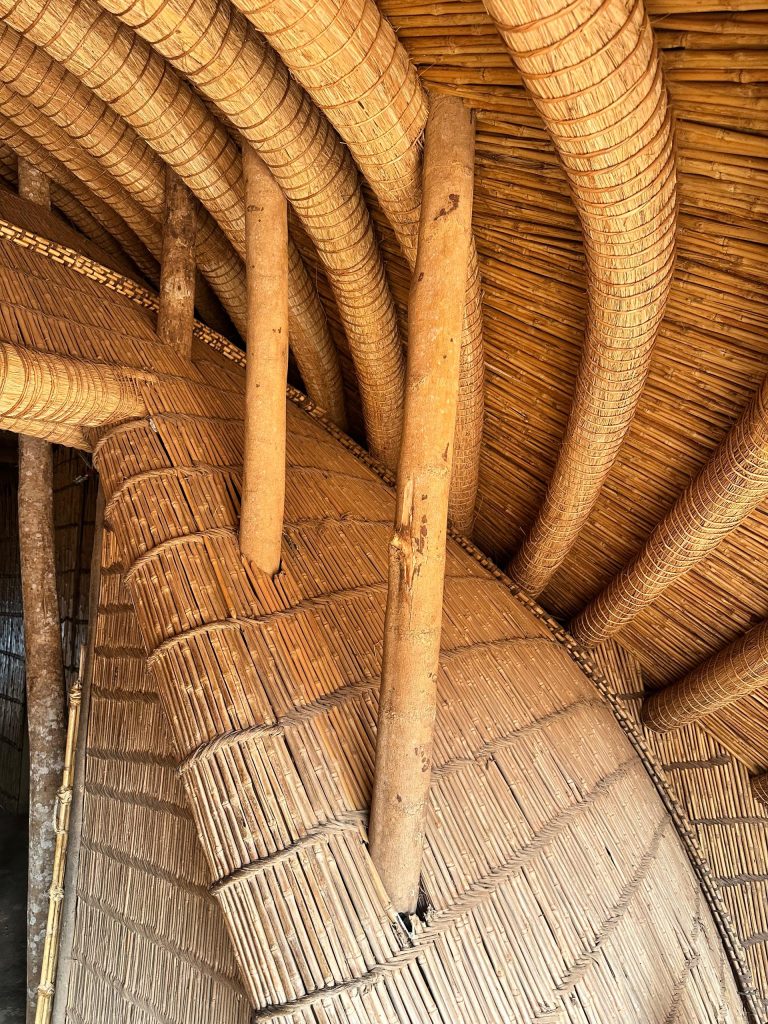
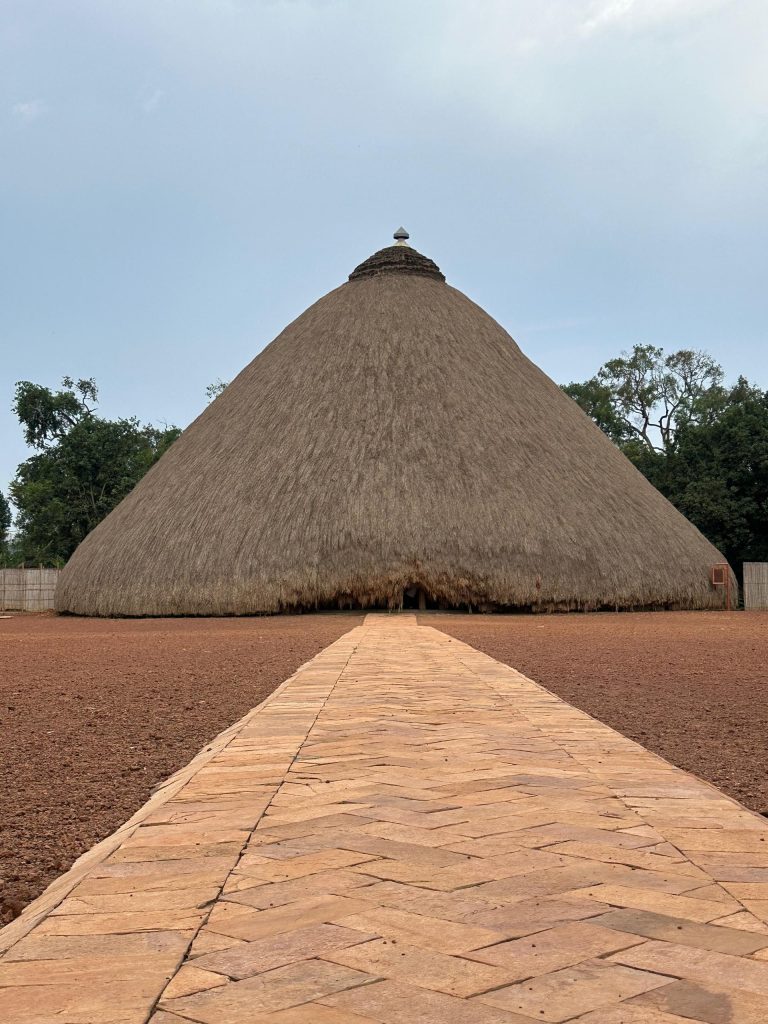
It features a dome shape with thatched roofing that extends to the ground, making it one of the largest thatched roofs globally. This architectural style is typical of Ganda royal houses. Inside, 52 rings symbolise clans, each with a specific construction role.
The tombs have symbolic doorways, with a uniquely decorated main entrance and simpler side entrances for the kings’ wives. The craftsmanship is labour-intensive, contributing to the lengthy reconstruction, which is now 99% complete.
What preservation efforts are in place to safeguard the Kasubi Tombs’ cultural heritage after the 2010 fire?
The Buganda Kingdom, the Ugandan government, and UNESCO have established a tripartite management plan, with revisions scheduled every 5 years to address cultural preservation and any emerging risks.
The restoration benefited from a Japanese government grant through UNESCO, leading to the installation of advanced firefighting equipment, including a 170,000-litre water tank and an underground well.
Future generations can learn about the site’s history and construction methods via extensive documentation.
In 2023, the World Heritage Committee removed the Kasubi Royal Tombs from the list of World Heritage in Danger, thereby enabling visitor access as part of tourism management piloting before the official inauguration.


