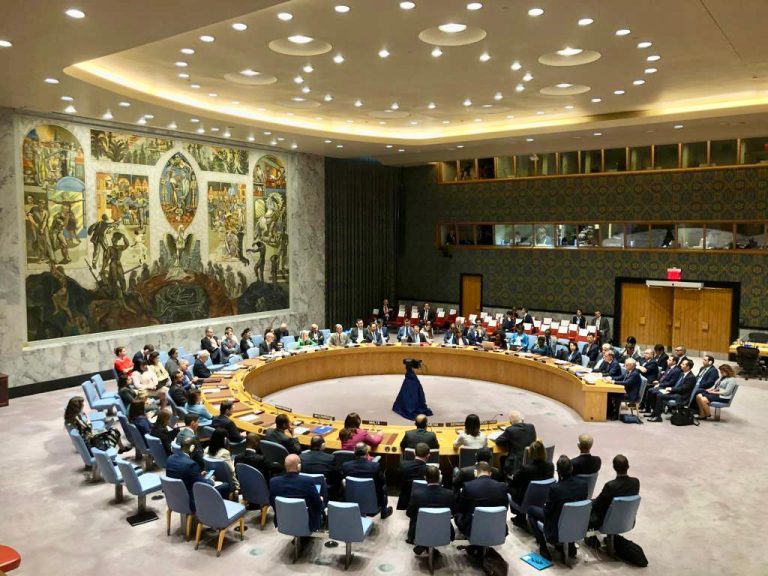
Kazakhstan’s First Deputy Foreign Minister, Kairat Umarov, actively participated in the BRICS foreign ministers’ meeting held in Cape Town, South Africa, on 2 June, as Kazakhstan seeks to become a member of the influential alliance, aiming to strengthen trade and economic cooperation.
During the meeting, Umarov engaged in constructive discussions with counterparts, including Naledi Pandor, the South African Minister of International Relations and Cooperation. Their talks centered around deepening political and economic ties between Kazakhstan and the BRICS member countries, exploring avenues for collaboration within multilateral frameworks, and exchanging insights on pressing international and regional issues of mutual interest.
We were making our way to the Rila Mountains, where we were visiting the Rila Monastery.
Kazakhstan’s active pursuit of BRICS membership
Kazakhstan’s interest in BRICS is driven by the alliance’s significant global presence, representing 35% of the Earth’s territory, 40% of the world’s population, and 30% of the global gross domestic product (GDP). Kazakhstan’s active involvement in the ministerial gathering reflects its commitment to pursue BRICS membership and tap into the extensive trade and economic opportunities offered by this influential group.
The event witnessed the participation of not only the BRICS member states but also the Friends of BRICS, a group comprising countries such as Argentina, Bangladesh, Burundi, Comoros, Democratic Republic of Congo, Egypt, Gabon, Indonesia, Iran, Kazakhstan, Saudi Arabia, the United Arab Emirates, and Uruguay. Kazakhstan’s invitation to the forum underlines its strategic role as the current chair of the CICA and its forthcoming chairmanship of the SCO (Shanghai Cooperation Organization).
Kazakhstan’s active pursuit of BRICS membership demonstrates its strong determination to foster trade and economic collaboration with the member countries, thereby enhancing its global economic footprint.
Safaricom has announced its intention to establish a smartphone assembly factory in Kenya, aiming to produce more affordable devices. The company plans to assemble approximately 1.2 million to 1.4 million smartphones per year, positioning itself as a key player in the realization of President William Ruto’s vision of manufacturing Africa’s most economical gadgets.
During a session with the National Assembly’s Finance and Planning committee on Tuesday, Safaricom vehemently opposed the proposed taxes on mobile phones outlined in the Finance Bill of 2023. The telecommunications giant argued that these taxes would hinder their ability to achieve the target price of a $50 smartphone (Ksh6,900), as they would raise the cost of locally assembled smartphones to Ksh11,500 ($83).
Safaricom Reveals Plan To Set Up Smartphone Factory
Safaricom
Safaricom’s Head of Venture, Karanja Gichiri, emphasized the need to address import, excise, and output VAT (Value Added Tax) in order to realize the President’s vision of an affordable $50 phone. Gichiri urged the Members of Parliament to consider these factors, stating that by addressing them, it would be possible to save Ksh4,000 ($28.99) and lower the cost of locally assembled smartphones from Ksh11,500 to Ksh7,500 ($54.35).
Gichiri revealed that Safaricom is currently working on establishing an assembly line in Kenya. However, the proposed taxes would render the project economically unfeasible.
“At present, we have one local assembly line that recently commenced operations. The most expensive component of a smartphone is the microchip responsible for running the 4G network. We have identified suitable suppliers, and the cost of a good phone based on the chip and components stands at $40 (Ksh5,520),” Gichiri explained.
He further added, “Following that, the assembly of the phone would cost Ksh300 ($2.17), including factory profit margins. Our aim is to pass on these cost benefits to the consumers.”
Safaricom’s initiative to establish a smartphone assembly line in Kenya aligns with their commitment to making mobile devices more affordable for the general population. By addressing tax concerns and streamlining production costs, the telecommunications company hopes to contribute to the realization of President Ruto’s vision of accessible and cost-effective smartphones in Africa.
KAMPALA – In a significant development for Uganda’s tourism sector, a major expansion plan was unveiled during the Peal of Africa Tourism Expo. The government announced that four airfields located in the country’s iconic National Parks will soon be upgraded to accommodate international visitors.
The Minister of Tourism, Wildlife and Antiquities, Tom Butiime, made the announcement at the expo held in Kampala. The plan entails the tarmacking and coding of airstrips in Kasese, Kidepo, Pakuba, and Kisoro National Parks. Additionally, immigration posts will be established in these areas, enabling visitors to directly land amidst the wildlife-rich landscapes teeming with elephants, antelope, and other species.
Uganda Announces Major Airfield Expansion to Boost Tourism
Rhino in Uganda
Describing the expansion as a “game changer,” Minister Butiime highlighted that the directive for these improvements came directly from President Yoweri Museveni. This development will allow tourists from destinations such as Dubai or Frankfurt to fly directly to these national parks on their private jets.
Previously, visitors had to go through Entebbe airport, near the capital Kampala, and then seek alternative transportation or travel by road to reach these locations as the existing airstrips were classified as “bush” airstrips.
Uganda has witnessed a strong rebound in visitor numbers in 2023 following the COVID-19 pandemic, with projections indicating a return to pre-pandemic levels next year. Presently, the country welcomes approximately 1.5 million visitors annually, contributing 7.7% to its GDP.
Lilly Ajarova, CEO of the Uganda Tourism Board, expressed the board’s readiness to host the tourism community once again. She emphasized the expo’s significance in driving the country’s tourism recovery and generating increased revenue and employment opportunities.
Ajarova emphasized Uganda’s commitment to responsible and sustainable tourism, which has become a growing trend worldwide. The focus will be on promoting the use of recyclable materials, waste reduction, and environmental conservation while respecting the host communities.
With 10 national parks, including the renowned Bwindi Impenetrable National Park, home to endangered mountain gorillas, Uganda offers diverse natural wonders and a rich cultural heritage. The expansion of airfields is set to facilitate easier access to these attractions, opening up new opportunities for tourists and boosting the country’s tourism industry.
EIB and Afreximbank Launch EUR 200 million Health Investment Initiative in Sub-Saharan Africa
Collaboration to Enhance Healthcare and Pharmaceutical Investment and Strengthen Health Resilience
The European Investment Bank (EIB), the world’s largest multilateral bank, and Afreximbank, the pan-African multilateral financial institution, have announced a strategic partnership aimed at bolstering healthcare and pharmaceutical investment across sub-Saharan Africa. The joint initiative, valued at EUR 200 million, was formally unveiled at the 5th United Nations Conference on Least Developed Countries in Doha, Qatar.
As part of Team Europe, the European Investment Bank supports high-impact health investments around the world.
European Investment Bank
The collaborative effort between the EIB and Afreximbank seeks to address critical healthcare challenges in the region while improving health resilience. By increasing access to healthcare services and supporting the production of safe and affordable medicines, the partners aim to combat prevalent diseases and enhance public health outcomes across sub-Saharan Africa.
Under the new health investment initiative, each institution will contribute EUR 100 million, marking the EIB’s first dedicated backing for intermediated health investment in Africa. The project forms part of the European Union Global Gateway initiative and has been meticulously designed by experts from both organizations to unlock vital investments in the healthcare sector.
With a focus on improving healthcare infrastructure and scaling up pharmaceutical production, the initiative aims to tackle diseases such as cancer, HIV, malaria, and tuberculosis. The partners will invest in the construction and equipping of clinics and hospitals, facilitating the swift treatment of communicable diseases and reducing infant mortality rates. Moreover, the collaboration aims to address the chronic shortage of essential medicines in the region, ensuring their availability to combat life-threatening ailments and improve maternal and child health.
Thomas Östros, Vice President of the European Investment Bank, emphasized the significance of the initiative: “As part of Team Europe, the European Investment Bank supports high-impact health investment around the world. The new EIB-Afreximbank health resilience initiative will unlock EUR 200 million of financing to strengthen health resilience across sub-Saharan Africa by improving access to healthcare and increasing local pharmaceutical manufacturing. This targeted financing cooperation between the EIB and leading financial partner Afreximbank demonstrates how partnership between Europe and Africa is improving lives and unlocking priority health investment.”
Mr. Denys Denya, Executive Vice President of Afreximbank, highlighted the urgency of the collaboration in light of the COVID-19 pandemic: “The coronavirus pandemic highlighted how the health of millions of Africans is uniquely threatened by limited access to both effective healthcare and affordable medicines. Afreximbank is pleased to join forces with the European Investment Bank to provide a co-lending facility of EUR 200 million to improve effective responses to health challenges across sub-Saharan Africa. This investment will build on the success of our existing cooperation designed to enhance access to finance by companies impacted by the pandemic and climate change-induced challenges.”
The partnership between the EIB and Afreximbank builds on their respective track records in supporting healthcare investments. Since the onset of the COVID-19 pandemic, the EIB has provided over EUR 12 billion globally for health-related projects, including vaccine development, hospital upgrades, and medical education. The bank has been actively involved in supporting health and healthcare investments in various African countries, contributing to the COVAX Covid vaccine initiative across the continent. Afreximbank has played a pivotal role in Africa’s response to the COVID-19 crisis. Through initiatives like the Africa Medical Supplies Platform (AMSP) and the AVAT program, the financial institution has disbursed more than $7 billion to help member countries mitigate the adverse impacts of the pandemic on their economies and healthcare systems.
The EIB and Afreximbank collaboration signifies a milestone in enhancing healthcare and pharmaceutical investment in sub-Saharan Africa. By leveraging their financial resources, expertise, and global partnerships,
The 18th edition of the Venice Architecture Biennale, titled “The Laboratory of the Future,” shifts its focus to Africa, presenting an ambitious exploration of the continent’s historical societies as a source of inspiration and a blueprint for global solutions. Curated by Lesley Lokko, the Biennale challenges entrenched concepts and invites visitors to question how Africa’s rich history can fuel radical imagination and foster cross-cultural collaborations.
Embracing the theme of the Biennale, “The Laboratory of the Future,” Africa emerges as a place of exploration, offering valuable insights into climate, land rights, decolonization, and cultures. By delving into Africa’s complex past, the Biennale aims to transcend imposed colonial borders and unveil the continent’s diverse identities as powerful catalysts for creativity.
Theme of the bienalle this year is: The Laboratory of the Future
Curated by Lesley Lokko. Giardini and Arsenale, May 20th > November 26th, 2023 (pre-opening May 18th and 19th).
The division of Africa by colonial powers disregarded its cultural diversity, leading to the erasure of ethnic societies’ cultural structures and the emergence of new national identities. The Biennale urges us to reassess the impact of this dual identity and consider how it can fuel innovative thinking. It emphasizes the urgent need for cross-cultural collaboration as a means to imagine and shape Africa’s future.
Through captivating installations, the Biennale gives voice to Africa’s constructed histories. One such installation, “Counteract” by Kere Architecture, offers a glimpse into the urban landscapes of Burkina Faso. It juxtaposes graphics showcasing utilitarian elements like advertisements, shop names, and public information, with a powerful message inscribed on the installation wall: “Just because our history was intercepted by others, does not mean our future has to be.” This thought-provoking piece celebrates the past, acknowledges the present, and sets a course for a different approach to West African architecture.
Artist Olalekan Jeyifous contributes to the Biennale with an installation called “All-Africa Protoport (AAP).” This visionary creation presents a potential future that draws upon the rich histories of indigenous African renewable technologies, inspiring contemplation and reflection.
The duality of the African identity raises profound questions about the role of art, design, and architecture. The Biennale challenges us to imagine a national architecture that embraces multiple ethnicities, and to reinvent traditional architectural styles in the context of modern national borders. These questions spark a journey of exploration and knowledge-building, encouraging artists and designers to embrace cross-cultural collaborations.
The Biennale highlights the transformative power of collaboration among societies with shared cultural histories but divergent national identities. By dismantling historical and colonial boundaries, Africa’s diverse ethnic and regional groups can engage in meaningful interactions, fostering creativity and innovation.
The concept of collaboration in the African art scene finds its roots in the Pan-African art movement of the early 20th century. This movement aimed to unify African cultures and promote a sense of shared identity, history, and creative expression. Notable art festivals, such as the World Festival of Negro Arts in Dakar (1966) and the Second World Black and African Festival of Arts and Culture in Lagos (1977), celebrated the continent’s rich cultural heritage while providing a platform for individual identities. These festivals laid the foundation for collaborative efforts that explore Africa’s multifaceted diversity.
Music serves as a prominent medium for cross-cultural collaboration, exemplified by Salif Keita’s song “Yamore,” featuring Cesária Évora. This soulful blend of languages and cultures weaves together Cape Verdean, English, French, and Bambara, conveying a message of love through linguistic diversity. Such collaborations serve as templates for fostering creativity in other forms of art, design, and architecture.
Uganda and Tanzania proudly unveiled the Kikagati Hydropower Project (Kikagati HPP), a groundbreaking initiative that marks the first cross-border hydropower project between the two nations. Situated on the Kagera River, this project, valued at $100 million, signifies a significant milestone in their collaborative efforts.
With a capacity of 14 MW, the Kikagati HPP has the remarkable ability to provide electricity to over 60,000 homes in both Uganda and Tanzania. The project, implemented by Kikagati Power Company Limited (KPCL), had its construction initiated in 2005. However, progress faced obstacles until 2017 when a bilateral agreement between the two countries propelled it forward to successful completion.
The inauguration ceremony, graced by President Samia Suluhu Hassan of Tanzania and her Ugandan counterpart, President Yoweri Museveni, emphasized the project’s profound impact on strengthening the historical and fraternal relationship between the two nations. President Hassan expressed her optimism about the project’s potential to enhance trade, investment, and cultural exchange between Uganda and Tanzania.
Kikagati Power
President Hassan further highlighted the transformative power of the Kikagati HPP in bridging the communication gap between urban and rural areas. Access to electricity would foster greater connectivity and social engagement among the people, thereby promoting inclusive development. She reiterated her government’s unwavering commitment to fostering strong brotherly friendship and cooperation with Uganda.
Echoing President Hassan’s sentiments, President Museveni reiterated his dedication to close collaboration with Tanzania across various spheres. He emphasized his government’s zero tolerance for bureaucratic hindrances that impede the speedy implementation of projects. President Museveni acknowledged the delays faced by the Kikagati HPP due to bureaucratic challenges, warning against the detrimental effects such delays can have on progress. He urged the political and bureaucratic classes in Africa to be more responsive to the people’s demands.
President Museveni extended his gratitude to the late President John Magufuli of Tanzania for his decisive actions in bringing the project to fruition. He commended President Hassan for continuing the visionary path set by her predecessor, further solidifying the strong bond between their nations.
Supported by Berkeley Energy, the Kikagati-Murongo project incorporates long-term technology with a guarantee of over 100 years. Luka Buljan, Managing Director of Berkeley Energy, emphasized the project’s significance in providing stable power to North West Tanzania and South West Uganda. Operated under a Build, Operate, and Transfer (BOT) framework, equal ownership between the governments of Tanzania and Uganda is anticipated after the expiration of the 20-year power purchase agreement.
The Kikagati HPP aligns with the vision of the East African Community (EAC) and the treaty for its establishment, focusing on cooperative exploitation of renewable energy resources to ensure
Plans to establish the African Medicines Agency (AMA), responsible for overseeing regulatory processes for pharmaceutical products throughout Africa, are progressing, according to official sources. As of now, 35 out of the African Union’s 55 member states have ratified the AMA Treaty. The recent inclusion of countries like Kenya, Malawi, and Sao Tome bolsters local pharmaceutical production efforts, aligning with the call for a unified One Health approach to disease control in Africa.
Chimwemwe Chamdimba, head of health at the AU Development Agency-New Partnership for Africa’s Development (AUDA-NEPAD), disclosed that the agency’s bureau is already operational, and the governing board is taking shape. The AMA, as a specialized health agency of the AU, aims to harmonize medicine regulations across Africa. Member states are expected to finalize the formation of the governing board in the coming months, thereby replacing the need for manufacturers to seek approval from each fragmented regulatory authority of the 55 member states or the five regional economic communities.
The harmonization efforts of the AMA will not only address fragmentation but also facilitate collaboration among the five African regions.
IMF Photo, James Oatway / Flickr cc
It will enable joint assessments and inspections by national regulators, fostering trust and cooperation within the regional economic communities. The AU is collaborating with partners like Amref Health Africa to train national regulators, and a continental regulatory reliance framework is being developed, with pilot implementation planned for the East Africa region.
The establishment of the AMA holds significant importance due to the challenges associated with accessing safe, affordable, effective, and quality medicines in Africa. Factors such as limited pharmaceutical industries, high costs of raw materials, inadequate investment in research and development, and reliance on foreign countries for medicines contribute to the complexities. Poor supply chains, insufficient government investment in the pharmaceutical sector, limited health workforce, and lack of infrastructure and technical expertise exacerbate the situation, leading to the circulation of counterfeit drugs causing numerous deaths each year.
Experts and academics in the health sector have widely welcomed the initiative, recognizing its potential to ensure access to safe and effective medicines for Africans. The inclusion of access to affordable and safe medicines as a fundamental human right in the UN-mandated Sustainable Development Goals further emphasizes its significance. The establishment of the AMA is seen as a crucial step towards achieving Universal Health Coverage and bridging the gap in healthcare access across the continent.
Michel Sidibé, the AU’s special envoy for AMA, applauded the agency’s formation, emphasizing its potential to encourage local development and manufacturing of medicines, reducing dependence on imports. Sidibé, a former minister of health and social affairs in Mali and former executive director of UNAIDS, highlighted how the COVID-19 pandemic exposed vulnerabilities and stressed the importance of regulatory harmonization in Africa.
Rwanda has been selected as the host country for the AMA headquarters. The agency’s establishment will complement the efforts of the Africa Centres for Disease Control and Prevention (Africa CDC), particularly in pandemic preparedness. It will enhance the continent’s readiness for future pandemics and support post-pandemic recovery. The AMA, as Africa’s second-largest health agency following Africa CDC, is expected to play a vital role in fostering the continent’s ambitions for drug and vaccine production.
General Atomics (GA) of the USA and Tokamak Energy of the UK have joined forces to collaborate on high temperature superconducting (HTS) technology, targeting fusion energy and other industrial applications. The partnership aims to capitalize on GA’s expertise in manufacturing large-scale magnet systems and Tokamak Energy’s pioneering knowledge in HTS magnet technologies.
Magnetic fusion relies on tokamaks, which utilize powerful electromagnets to confine and shape superheated hydrogen gas, known as plasma. To achieve the necessary conditions for energy production through fusion, tokamaks must heat the plasma to temperatures exceeding 100 million degrees Celsius, surpassing the sun’s core temperature. This temperature threshold is crucial for making fusion a commercially viable energy source.
We were making our way to the Rila Mountains, where we were visiting the Rila Monastery.
High temperature superconducting (HTS) technology
The collaboration between GA and Tokamak Energy focuses on advancing high-performance HTS magnets. These magnets generate strong magnetic fields by circulating large electrical currents through arrays of electromagnet coils surrounding the plasma. They are built using cutting-edge HTS tapes, which are multi-layered conductors coated with a superconducting material called ‘rare earth barium copper oxide’ (REBCO). By enhancing the power of HTS magnets, fusion power plants can use thinner magnetic coils while generating plasmas at higher densities.
Anantha Krishnan, Senior Vice President of GA, expressed enthusiasm about the collaboration, highlighting Tokamak Energy’s leadership in HTS magnet modeling, design, and prototyping, while emphasizing GA’s expertise in developing and fabricating large-scale superconducting magnets for fusion applications. Warrick Matthews, Managing Director of Tokamak Energy, acknowledged GA’s significant experience, knowledge, and manufacturing capabilities in producing large superconducting magnets. He also emphasized Tokamak Energy’s decade-long focus on HTS technologies for fusion and their potential applications in aviation, naval, space, and medical industries.
Tokamak Energy has set a roadmap to deploy commercial fusion power plants by the mid-2030s. To achieve this, they plan to complete the ST80-HTS device in 2026, which aims to demonstrate the full potential of high temperature superconducting magnets. The insights gained from ST80-HTS will inform the design of their fusion pilot plant, ST-E1, which aims to deliver electricity and produce up to 200 MW of net electrical power by the early 2030s.
In a separate collaboration, Germany’s Max Planck Institute for Plasma Physics has partnered with Proxima Fusion to further develop the stellarator concept for fusion power. Proxima Fusion, a Munich-based company founded by former IPP scientists, intends to design a nuclear fusion power plant based on IPP research.
Stellarators offer an alternative approach to tokamaks for magnetic confinement fusion. Unlike tokamaks, which have a uniform toroid shape, stellarators have a twisted figure-8 shape. Stellarators offer advantages such as continuous operation and improved plasma stability properties compared to pulsed tokamaks.
The Max Planck Institute operates both the ASDEX Upgrade tokamak and the Wendelstein 7-X stellarator. In February, the Wendelstein 7-X achieved a significant milestone by generating a high-energy plasma that lasted for eight minutes, with plans to extend plasma discharges to 30 minutes in the future. IPP aims to advance stellarators towards application maturity and sees great potential synergies in the collaboration with Proxima Fusion. IPP will contribute its expertise as the leading institute in stellarator physics, while Proxima Fusion will focus on technological advancements, fostering a fruitful public-private partnership.
Amid fanfare and high expectations, Nigeria’s outgoing President, Muhammadu Buhari, commissioned the much-vaunted Dangote refinery alongside his counterparts from Ghana, Togo, Senegal, Niger, and Chad. The massive 650,000 barrels per day oil plant sits on 2,635 hectares of land in Dangote Industries Free Zone in Ibeju-Lekki, Lagos, and will employ over 100,000 persons.
The largest refinery in the world is set up to process crude oil grades from the continent of Africa, Asia and America, with a delivery of a surplus of close to 38 million litres of petrol, diesel, kerosene and aviation fuel for Nigeria’s daily. The refinery, owned by Nigerian business tycoon Aliko Dangote was inaugurated on the 22nd of May, 2023. It will transform crude oil into different uses of petroleum products such as diesel, gasoline, jet fuel and kerosene.
The largest refinery
Dangote Refinery: A Game Changer
At the commission ceremony, Dangote said the priority was to ramp up production to ensure the refinery could fully satisfy Nigerian demand and eliminate “the tragedy of import dependency.”
Opening Ceramony
According to Reuters, the government of outgoing President Muhammadu Buhari hopes that the refinery resolves Nigeria’s repeated fuel shortages, spending $23.3 billion last year on petroleum product imports and consuming around 33 million litres of petrol a day.
Export hub for petroleum products
The plant plans to export the surplus petrol, turning Africa’s biggest oil producer into an export hub for petroleum products. According to Dangote, Africa’s richest man, who funded the refinery’s construction, the refinery equally plans to export diesel.
The massive petrochemical complex cost $19 billion to build after years of delay – above initial estimates of between $12 billion and $14 billion – and has outstanding debt of around $2.75 billion, according to Nigeria’s central bank governor.
The complex also has a 435-megawatt power station, deep seaport and fertilizer unit, and it is expected to be operational by June.
According to analysts, the current opaque system has fostered corruption and limited the government’s ability to invest in critical areas like education and healthcare.
“A notable milestone” and “a game changer”
Buhari — who steps down on May 29 after eight years in office — described the project as “a notable milestone” and “a game changer for the downstream petroleum products market, not only in Nigeria but for the entire African continent.”
Uganda’s Ministry of Finance, Planning and Economic Development has recently stated that the East-African nation exported goods worth $674.54 million in March 2023, a 93.0 percent increase over the $349.44 million shipped in February 2023.
“Coffee exports during the month amounted to $71.54 million, an 8.4 percent increase from $66.03 million in February 2023. This growth was mainly attributed to exporters who off-loaded coffee from their warehouses for sale to benefit from the rising international price of Robusta coffee,” an extract from the report reads.
The African Business Insider reported that in comparison to the same month the previous year, the ministry officials said merchandise exports grew by 85.4 percent from $363.74 million in March 2022 to $674.54 million in March 2023.
Uganda Export Freezone
Contributing factors This was primarily attributed to increased export earnings from mineral products, maize and tobacco during the month. Mineral products, mainly gold, increased significantly following the resumption of the gold trade in August 2022.
The East African Community (EAC) remained the top destination of Uganda’s exports in March 2023, accounting for 35.7 percent of total monthly exports. For Trade Balance with EAC in March 2023, Uganda traded at a surplus of $15.9 million with the regional bloc. “This was an 84.4% decline from the surplus of $102.4 million in the previous month.
The decline was largely due to imports from the Democratic Republic of Congo, Tanzania, and Kenya which increased considerably by $60.93 million, $60.1 million, and $14.19 million, respectively,” said Dr. Albert Musisi, commissioner macroeconomic department. However, trade deficits were recorded for Tanzania and Kenya, while surpluses were recorded for Congo, South Sudan, Rwanda, and Burundi.
A decreasing deficit
According to the data, Uganda’s merchandise trade deficit decreased from $297.66 million in February to $241.93 million in March 2023, a decrease of 18.7%. The merchandise trade deficit decreased from $292.94 million in March 2022 to $241.93 million in March 2023, a 17.4% decrease year over year.