


Inside Utel’s new partnership with Rowad Capital that could transform Uganda’s telecom industry
World Business Journal talks to Margaret Lutwama Mukiibi, Chief Operating Officer at Utel, about the next steps in the company’s implementation strategy after Rowad Capital’s stake acquisition, integrating and adopting financial technology, and the company’s primary focus for the next 12 months.
Following Rowad Capital’s $225 million acquisition of a 60% stake in Utel, what are the next steps in the company’s implementation strategy?
With the government retaining a 40% stake, we aim to uphold our commitment to serving national interests by ensuring affordable digital access for underserved populations.
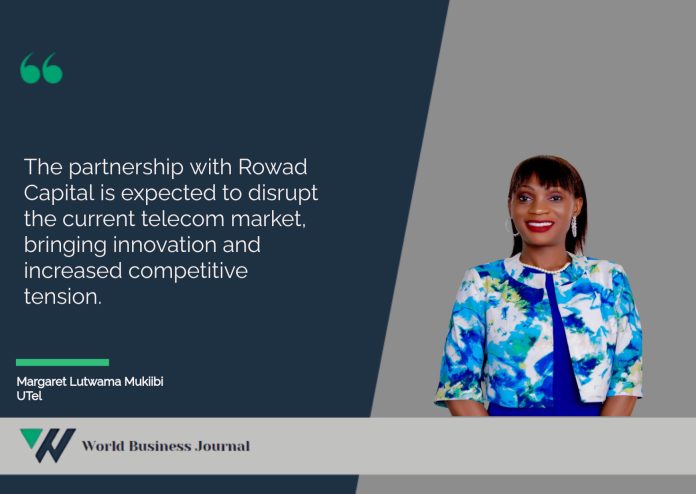
This new ownership equilibrium will foster robust collaboration between public and private stakeholders. We anticipate that a new board of directors will assume their roles soon, paving the way for the first tranche of a $25M investment. This partnership is expected to disrupt the current telecom market duopoly, bringing innovation and competitive tension.
Our immediate focus will be on accelerating the deployment of 4G in Kampala and expanding nationwide, while upgrading the 2G network and preparing for future 5G scalability.
On customer acquisition, our strategy targets underserved segments, including youth, SMEs, and rural populations, supported by investments in Customer Relationship Management systems.
From an operational perspective, this partnership is anticipated to significantly improve our efficiency, allowing us to offer more competitive pricing for both voice and data services. We believe these efforts will drive substantial subscriber growth and transform the telecom industry landscape.
What are UTEL’s plans for integrating and adopting financial technology (fintech)?
This year, we’ll launch fintech services, leveraging our government partnership for e-government payment solutions and expanding our financial services offerings. We are keen on leveraging the digital ecosystem by integrating telecom systems with FinTech, e-commerce, e-health, and e-education platforms.
The investment in mobile money has a significant ripple effect on Ugandans and reshapes how the sector is perceived. It allows users to conveniently pay for services from the comfort of their own homes, thus reducing the need for visits to physical service centres—a change we aim to promote among Ugandans.
What is the primary focus for the next 12 months?
Our primary focus will be on enhancing our telecom network to remain competitive. We’ve seen significant returns from other providers, and a strong network is crucial for customer satisfaction. Currently, our mobile service works well but lacks extensive coverage, with only 437 sites compared to our competitors’ 5,000. This results in service gaps outside central areas like Kampala. To address this, a network revamp is essential. With improved coverage, we can provide seamless connectivity and establish a strong market presence.


