Saturday, October 17, 2026
No menu items!
Home Blog Page 9

Pamela K. Mbabazi Outlines NDP IV Strategic Framework to Drive Inclusive Growth and Double-Digit Economic Expansion

Pamela Mbabazi Outlines NDP IV Strategic Framework to Drive Inclusive Growth and Double-Digit Economic Expansion

World Business Journal talks to Pamela K. Mbabazi, Chairperson of the National Planning Authority, about NDP IV’s strategic framework aimed at driving economic growth. She discusses how the plan synergises with the 2030 Agenda for Sustainable Development and addresses challenges such as low productivity and a weak private sector.

How does NDP IV facilitate the 2030 Agenda for Sustainable Development with Uganda’s vision for tenfold growth?

NDP IV is a strategic framework aligning with the 2030 Agenda for Sustainable Development and Uganda’s goal for tenfold economic growth. The theme, “Sustainable Industrialisation for Inclusive Growth, Employment, and Wealth Creation,” integrates all 17 SDGs into core objectives, ensuring that national development efforts contribute to global targets.

Key initiatives focus on improving infrastructure, fostering innovation, and attracting foreign investment. For instance, programmes that improve livelihoods and financial inclusion, particularly through the Parish Development Model, address SDG 1 (No Poverty).

SDG 3 (Good Health and Well-Being) is supported by expanding universal health coverage, improving the National Health Insurance Scheme, upgrading hospitals, and expanding community health centres. 

SDG 4 (Quality Education) elevates vocational and higher education, equipping Ugandans with relevant skills. The plan expands the Skilling Uganda programmes, invests in modern training facilities, and integrates digital learning. Partnerships with the private sector strengthen apprenticeship opportunities, while increased funding for STEM fields encourages careers in high-demand areas. Student loan schemes improve equitable access, and better teacher training ensures effective delivery of the curriculum.

SDG 13 (Climate Action) advances sustainability through climate-smart technologies in infrastructure, agriculture, and industry. Investments in renewable energy and sustainable urban planning aim to reduce carbon footprints. Policies for afforestation and wetland restoration address environmental degradation, while sustainable land use practices help farmers adapt to climate change.

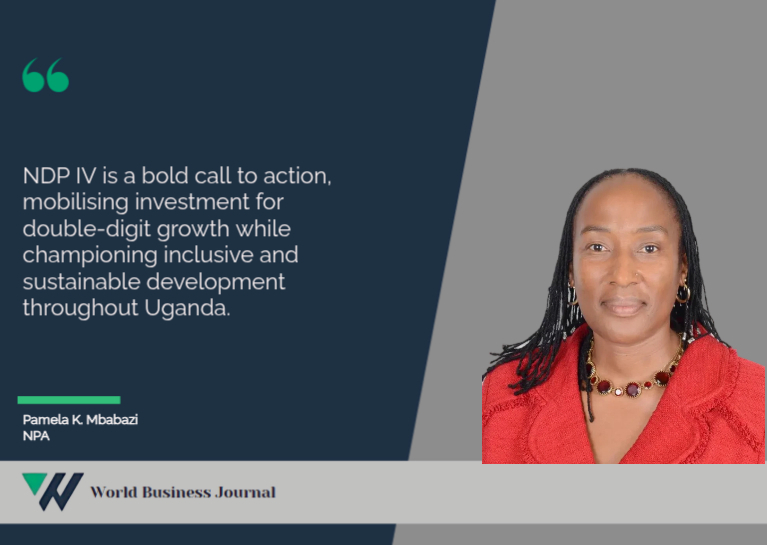
NDP IV is a bold call to action, mobilising investment for double-digit growth while championing inclusive and sustainable development throughout Uganda.

What measures are being implemented to tackle the challenges of low productivity and a weak private sector identified in NDP III?

We are prioritising capacity building and digitisation to boost efficiency and productivity, providing incentives such as tax breaks to encourage private sector investment, and utilising Indicative Planning Figures to set realistic targets. A new Key Performance Indicator system is being established for data collection and progress tracking. 

Coordination among government agencies will be improved, with regular performance reports to ensure accountability. The NDP IV will adopt a holistic approach to economic growth, emphasising agriculture and agro-industrialisation, and will shift to outcome-based budgeting to align financial resources with strategic objectives.

Finally, we are implementing citizen feedback mechanisms to enhance transparency and accountability in service delivery, allowing public input on government programmes.
UNBS Executive Director Unveils Pre-Market Approval System to Accelerate Product Compliance and Market Entry

UNBS Executive Director Unveils Pre-Market Approval System to Accelerate Product Compliance and Market Entry

World Business Journal talks to Eng. James N. Kasigwa, Executive Director of the Uganda National Bureau of Standards, about their new five-year strategic plan. This plan aims to reduce certification costs, implement a pre-market approval system, and address key objectives designed to overcome the challenges faced by small and medium-sized enterprises (SMEs) and the broader industry sector.

How will the new five-year strategic plan assist SMEs in elevating their standards, and what specific goals and actions are proposed?

Our new five-year strategic plan is dedicated to improving the quality standards of SMEs and tackling the high informality rate, which impacts 52% of our businesses.

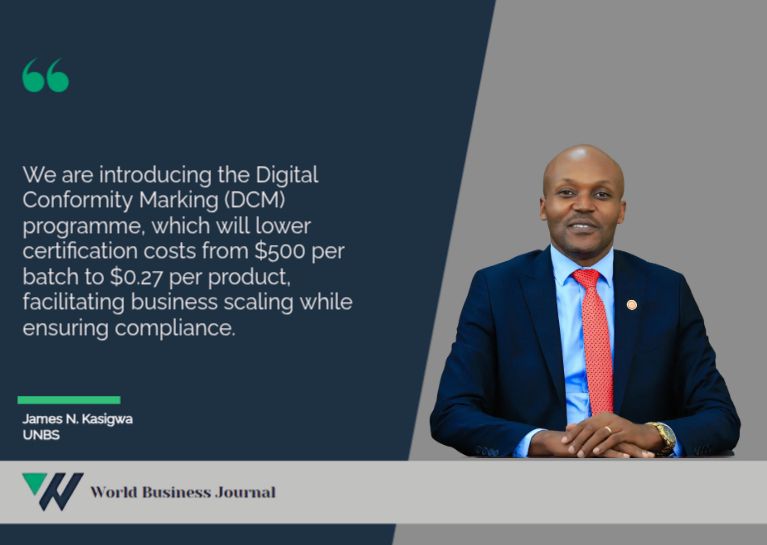
We are introducing the Digital Conformity Marking (DCM) programme, which will lower certification costs from $500 per batch to $0.27 per product, facilitating business scaling while ensuring compliance.

A new pre-market approval system will expedite product market entry while ensuring safety and quality.

To further support certified products, we are offering tax waivers on raw materials, benefiting both domestic and imported inputs used in Ugandan manufacturing. 

The plan also supports informal enterprises by promoting the formation of organised associations, such as cooperatives. This facilitates better market access and encourages collective product certification, helping these enterprises compete more effectively.

What is the timeline for issuing the Global GAP certification?

By Q3, certified auditors at our bureau will enable us to reduce Global GAP certification fees from $10,000-$25,000 to $4,000. To further increase accessibility, we will collaborate with cooperatives and programmes like PDM to align agriculture with global standards and boost farmers’ international competitiveness.

What are UNBS’s objectives in the next 24 months?

We intend to reduce the import processing time from 6 days to just one. Regarding certifications, we aim to complete most of them in 14 to 30 days, depending on test complexity. 

Traditionally, we’ve concentrated on agro-processing, but now we recognise the need to strengthen our presence, particularly in the oil and gas sectors, through fiscal metering.

By calibrating meters accurately, we uphold the Weights and Measures Act, ensuring precise volume and flow measurements for oil, electricity, and water, which bolsters business and consumer confidence.

Accurate measurement is crucial in our efforts to promote fair trade, safeguard consumers, and boost investor confidence. For instance, if a consumer pays for a litre of fuel, they should receive a full litre. This trust extends to SMEs, preventing value discrepancies due to measurement inaccuracies. 

A 2023 ISO study titled “The Economic Impact of Standards in Developing Countries” indicates that a 1% increase in standards correlates with a 0.1% boost in productivity. With a young labour force and abundant resources, implementing rigorous standards will strengthen our economic competitiveness and growth potential.


Irene Birungi Mugisha Highlights Presidential CEO Forum’s Role in Driving Public-Private Dialogue and National Investment Strategy

Irene Birungi Mugisha Highlights Presidential CEO Forum’s Role in Driving Public-Private Dialogue and National Investment Strategy

World Business Journal talks to Irene Birungi Mugisha, CEO of the Presidential CEO Forum, about the organisation’s objective of creating a unified approach to development and investment by empowering dialogue with the public and private sectors, the impact of the organised retreats to date, and how harnessing effective dialogue contributes to the nation’s development and investment agenda.

What is the objective of the Presidential CEO Forum?

Established in 2021, we serve as a high-level public-private dialogue platform that brings together government leaders, private sector CEOs, policymakers, and stakeholders to shape economic reforms and policy direction. The Forum promotes mutual understanding and collaboration between the private sector and government, with the ultimate goal of driving Uganda’s sustainable economic growth.

Held twice a year and hosted by H.E. the President, our biannual retreats have become instrumental in advancing strategic partnerships, public-private joint ventures, and regional learning missions. These retreats align government and private sector goals, creating a unified approach to development and investment.

What key achievements have emerged from the previous biannual retreats, and what will be the focus and timeline of the upcoming 6th retreat?

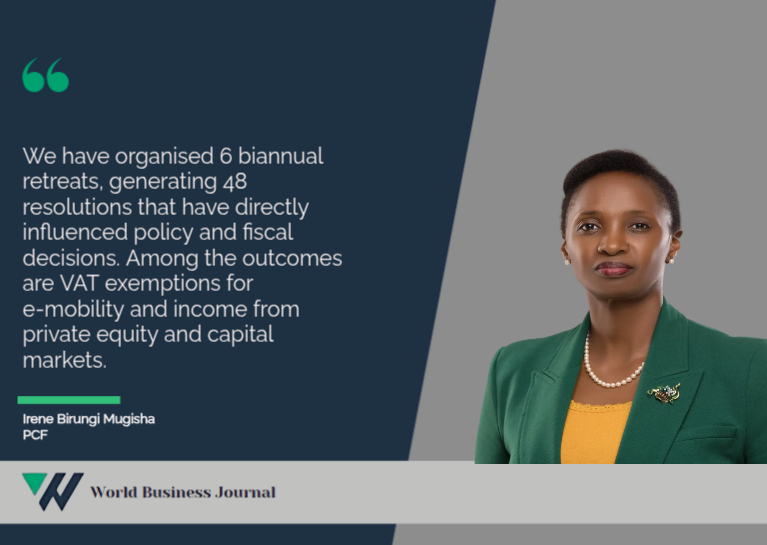
We have organised 6 biannual retreats, generating 48 resolutions that have directly influenced policy and fiscal decisions. Among the outcomes are VAT exemptions for e-mobility and income from private equity and capital markets. These reforms signal a stronger, more responsive business environment.

Our input into the National Development Plan IV (NDP IV) has ensured that all retreat resolutions are embedded into the Program Implementation Action Plans (PIAPs). This has strengthened engagement between National Development Agencies (NDAs) and the private sector and catalysed major national projects, notably Kiira Motors, positioning it as a regional industrial leader.

How does effective dialogue influence economic growth and drive private sector expansion?

Effective dialogue is central to policy development, investor confidence, and private sector expansion. By promoting trust, transparency, and shared ownership of development priorities, PCF supports data-driven advocacy and inclusive growth. Current collaboration with the National Planning Authority is focused on developing a responsibility matrix to monitor the implementation of NDP IV commitments.

We are also working with the Economic Policy Research Centre (EPRC) to ensure our engagements are research-based and solution-oriented. At the same time, we are intensifying efforts to inform businesses—especially SMEs—about trade and investment opportunities under regional blocs like EAC, AfCFTA, COMESA, and SADC.

Clear regulatory communication, consistent political support, and grassroots feedback are essential for sustaining momentum. As Uganda’s economy continues to evolve, we remain committed to fostering actionable partnerships that deliver results beyond the boardroom.


NEMA Reports 40% Protected Area Coverage as Biodiversity Strategy Exceeds 2030 Goal

NEMA Reports 40% Protected Area Coverage as Biodiversity Strategy Exceeds 2030 Goal

World Business Journal talks to Akankwasa Barirega, Executive Director at the National Environment Management Authority, about efforts being made to protect wetlands as key biodiversity assets, measures taken to address noise pollution, and the state of forest conservation in the country.

What notable successes and hurdles define the journey of Uganda’s National Biodiversity Strategy and Action Plan II?

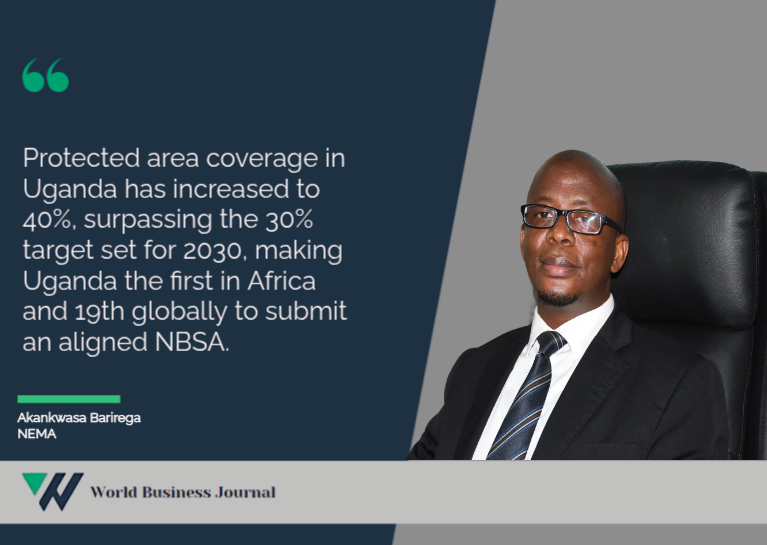
Protected area coverage in Uganda has increased to 40%, surpassing the 30% target set for 2030, making Uganda the first in Africa and 19th globally to submit an aligned NBSA. All wetlands, which cover 13% of the area, have been gazetted, with 9.3% still intact. Measures have been implemented to protect wetlands as key biodiversity assets, and restoration of degraded wetlands has started nationwide. 

Wildlife conservation efforts are making progress, with elephant, buffalo, giraffe, and rhino populations experiencing growth. Mountain gorilla numbers are currently estimated at 450. However, many big cat and bird species still face significant challenges. Conservation strategies remain crucial, including initiatives around Lake Victoria, where addressing illegal fishing is helping to restore fish populations and enhance biodiversity.

We stopped issuing new permits for wetland activities, preserving existing industrial areas and banning future factories in wetlands, except for public projects. 

While policies like the National Environment and Wildlife Laws are improving, challenges persist, such as limited resources, information gaps, and coordination issues among government departments. Local governments also struggle with the capacity for monitoring environmental changes.

What is the air quality in Kampala, and what efforts are being made to address noise pollution?

The air quality averages 15 micrograms per cubic meter of PM2.5, which is within the WHO’s transitional target but above the ultimate goal of 5 micrograms. The air quality is better in green areas like Kololo, and residents can use tools like the AirQo app to monitor it. 

Efforts to address noise pollution include enforcing the use of noise meters in large venues and tackling issues such as inadequate personnel and equipment. Actions involve equipment confiscation and fines, with plans to form a dedicated enforcement team to improve compliance.

How is deforestation being addressed?

Forest cover has been increased from 9% in 2015 to 13.2% today, aiming for 15% by 2040. A key initiative, Roots (“Running Out Of Trees”), aims to plant 200M trees by 2026, with at least 40M trees planted annually. 

A national carbon market is planned to require industries unable to reduce emissions to buy carbon credits from tree planters. Regulations are in progress, with implementation expected within 2 years.


SHIPU Builds Investor Confidence, Protects Over $1B and Resolves Hundreds of Complaints in First Yearr

SHIPU Builds Investor Confidence, Protects Over $1B and Resolves Hundreds of Complaints in First Year


World Business Journal talks to Col. Edith Nakalema, Head of Unit at the State House Investors Protection Unit (SHIPU), about the agency’s performance in its first year, various initiatives to reinforce investor confidence, the impact and role of the EIPP platform, and common challenges faced by investors.

How has SHIPU performed in its first year, and how does the EIPP portal enhance investor protection?

In the first year, we have effectively protected investments exceeding $1B. The unit handled over 800 investor complaints, resolving approximately 720, with a significant focus on combating fraud, particularly impersonation scams. 

The EIPP platform has reinforced investor confidence by providing reliable information from Ugandan government agencies and trusted private sector partners. By consolidating necessary guidance on taxes, incentives, and procedures, the portal streamlines the investment process. This not only saves investors time and reduces frustration by eliminating the need for visits to multiple offices but also mitigates corruption by minimising human interaction.

The portal is designed to serve 4 crucial functions for investors. It provides guidance to authentic government ministries, departments, and agencies; offers mechanisms for safe reporting, including anonymous reporting, with responses delivered within three to four days; facilitates enquiries with a 24-hour response time; and collects feedback to ensure effective enforcement and improvement.

We’ve brought together key entities like the UIA, URSB, and URA into one platform to streamline investor responses and access to investment information.

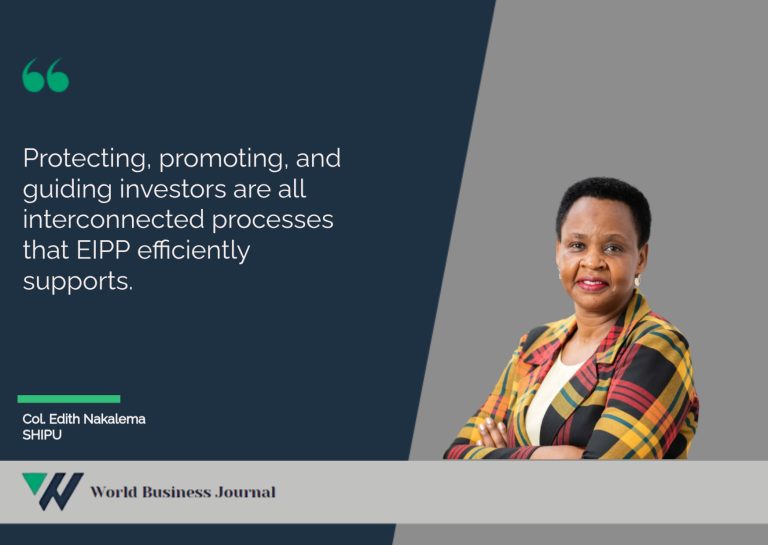
Protecting, promoting, and guiding investors are all interconnected processes that EIPP efficiently supports.

Investors can easily track their complaints or enquiries using a reference number, allowing for transparency and accountability in following up on issues.

Our goal is to ensure a secure investment experience by providing essential tools for due diligence and guidance, supporting well-informed decisions and minimising risks.

What are the common challenges faced by investors?

Foreign investors struggle with land acquisition delays and potential encumbrances. Both local and foreign investors occasionally encounter bureaucratic hurdles with government officials and deal with risks of identity-based fraudulent activities.

What advice would you give to prospective investors considering Uganda as an investment destination?

To prospective investors, my foremost advice is straightforward: consider Uganda as your top investment destination.

The country provides a stable, secure environment with abundant natural resources and a supportive climate for business. With systems like the Electronic Investor Protection Portal (EIPP), you’ll have the tools for due diligence and risk management.

Although no nation is entirely free of governance challenges, the Ugandan government is dedicated to guiding, protecting, and supporting investors.


Zahra Foods Uses Jackfruit Innovation to Expand Plant-Based Product Portfolio

Zahra Foods Uses Jackfruit Innovation to Expand Plant-Based Product Portfolio

World Business Journal talks to Quresh Fidahusein, Founder & CEO, Zahra Foods, about his company’s innovative plant-based product line, the demand for ready-to-eat options, the company’s competitive advantage in dehydrated products, and integration of refugees into commercial activities through the ‘Travel Beyond Bars’ project.

Could you give us a brief overview of your company?

Founded in 2008, “Zahra” means “blossom” in Arabic, symbolising our focus on growth and vitality. Our product line features dehydrated Ugandan tropical fruits like pineapples, mangoes, and bananas, along with various nuts. We export 70% of our products internationally, while 30% are sold locally.

In 2021, through the Dutch Embassy’s acceleration programme, we developed a plant-based meat product using dehydrated jackfruit. Our product rehydrates to 7 times its weight, lowering shipping volumes and environmental impact.

In Uganda, where commercial jackfruit farming is absent, our value chain transforms subsistence farming into an economic opportunity. We now partner with 300 farmers, having harvested around 210 tonnes in 2024.

What is the market potential for the jackfruit-based product?

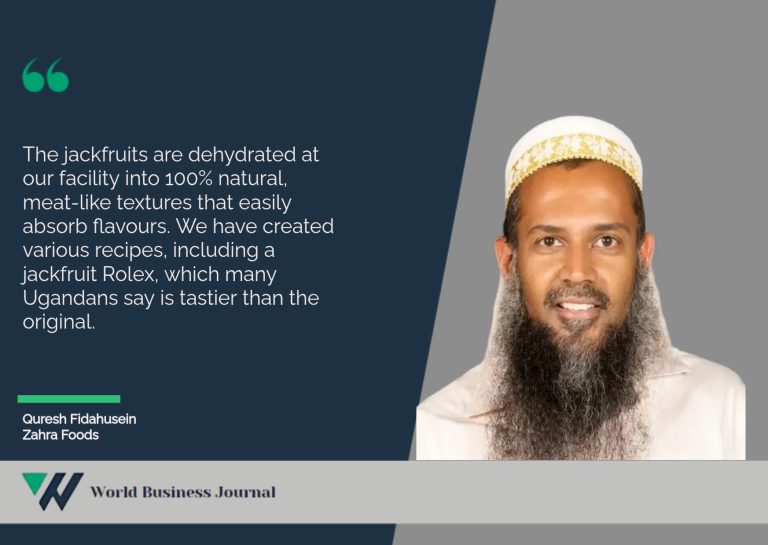
We’re focusing on the rapidly growing plant-based market in Europe and the West, largely driven by health-conscious consumers adopting vegetarian or vegan lifestyles. The jackfruits are hand-selected at a young age from ancestral trees across the country and dehydrated at our facility into 100% natural, meat-like textures that easily absorb flavours. 

We are also developing B2C products targeting the demand for ready-to-eat options. We have created various recipes, including a jackfruit Rolex, which many Ugandans say is tastier than the original. 

Experimenting with recipes is crucial due to the unfamiliarity with this new ingredient. Our strategy relies on demonstrating its use to potential buyers who often lack knowledge about it. 

What are the main goals and impacts of the “Travel Beyond Bars” project, developed in collaboration with the Japan International Cooperation Agency?

The project seeks to improve the integration of refugees into commercial activities through private sector involvement. 

We collaborate with the Kyangwali Refugee Settlement, located on the shores of Lake Albert, to source 50% of the ingredients for The Blossomz Revive Breakfast Bars. These bars are already available in the U.S. market and in supermarkets in Kampala.

Having successfully demonstrated this proof of concept, the project is now seeking funding to scale up.

Two Harvests a Year, Global Demand, and Growing Opportunities: VANEX’s Prossy Tumushabe Bahiigwa on Uganda’s Vanilla

Two Harvests a Year, Global Demand, and Growing Opportunities: VANEX’s Prossy Tumushabe Bahiigwa on Uganda’s Vanilla

World Business Journal talks to Prossy Tumushabe Bahiigwa, Executive Director at the Association of Vanilla Exporters of Uganda, about the growth of the vanilla industry, the advantage the country has by way of two annual harvests, challenges in increasing the growers’ base, and various steps being taken to market the produce internationally.

What is the role of the Association of Vanilla Exporters of Uganda?

VANEX, founded in 2003, is a membership organisation with over 15 exporting companies that collaborate with around 65,000 smallholder growers across 38 districts. Our mission is to harmonise and coordinate efforts within Uganda’s vanilla export sector.

What is the potential of the vanilla industry in Uganda?

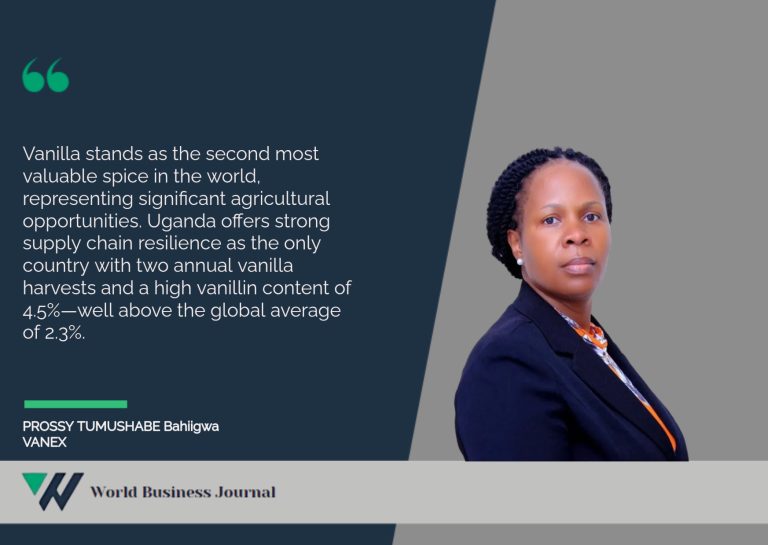
Vanilla stands as the second most valuable spice in the world, representing significant agricultural opportunities. 

Photo Credit: Vanex

Uganda offers strong supply chain resilience as the only country with two annual vanilla harvests. It benefits from a hands-off government within a free trade zone, a long-standing presence in the US and EU markets, and a stable landlocked location with no risk of cyclones. Our vanilla boasts a high vanillin content of 4.5%, well above the global average of 2.3%. In 2024, production surged to 604 MT, driven by strong demand, increased grower confidence, and robust market engagement from exporters. 

We contribute approximately 10% of the global vanilla supply, providing a reliable alternative to Madagascar, which dominates with a supply of over 70% of worldwide exports.

The economic viability of vanilla cultivation is underscored by the potential for intercropping with staple crops such as coffee, bananas, and beans. This approach can yield a potential net income of about $3,000 per acre. 

Essential farming practices include hand pollination and meticulous harvest management, with Jatropha trees recommended in intercropping systems for their minimal nutrient competition.

Currently, most of the vanilla exports go to the U.S. and the EU, but there are plans to expand into the Asian market, enhancing Uganda’s global presence in the vanilla industry.

Modern Group Chairman Details Production Scaling and Product Expansion in Tiles and Sugar

Modern Group Chairman Details Production Scaling and Product Expansion in Tiles and Sugar


World Business Journal talks to Ashish Monpara, Chairman of Modern Group, about the company’s expansion in the tile and sanitary ware sector, the operationalisation of Kidera Sugar—set to become the largest sugar mill in East Africa—the core challenges in ensuring smooth operations along the manufacturing value chain, and the integration of technology and e-commerce into the business.

How is the initiative to triple tile production progressing?

Tile production has doubled to 100,000 sq. ft. per day, with new offerings in glazed tiles, larger formats, and outdoor options for parking and pools.

Photo Credit: Modern Group

Our portfolio now includes bath fittings and sanitary ware. We have also introduced Modern Adhesive to address adhesion quality issues and improve tile setting.

We have expanded our retail network to 50 locations in East Africa: 15 in Tanzania, 10 in Kenya, and 25 in Uganda.

What is the current status, and what are the plans for the sugar business?

Kaliro is currently operating at full capacity, crushing 2,500 tonnes of cane per day and producing about 250 metric tonnes of sugar daily, with plans underway to double this capacity.

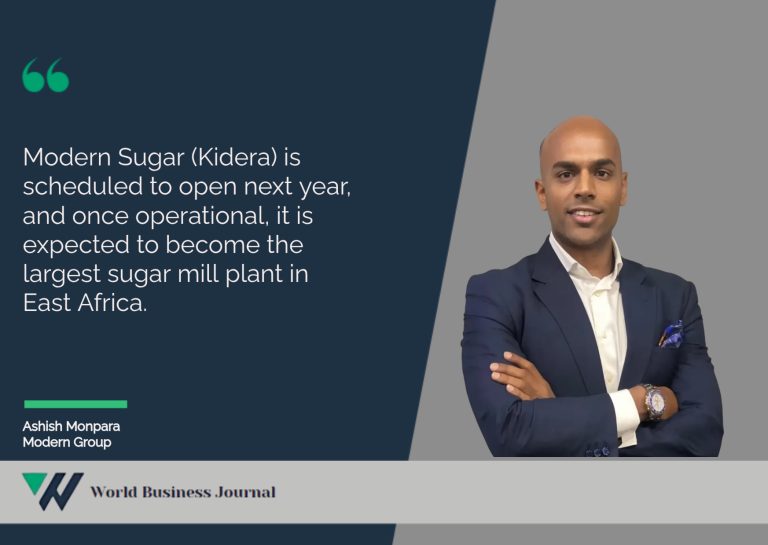
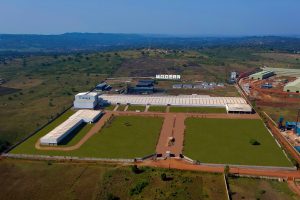
Modern Sugar (Kidera) is scheduled to open this year, and once operational, it is expected to become the largest sugar mill plant in East Africa, with a planned crushing capacity of 10,000 tonnes of cane per day (TCD) and an anticipated annual production of approximately 1 million tonnes (MT) of sugar.

This plant will produce both raw (natural brown) and industrial-grade (white) sugar. It is projected to have a significant economic impact by creating around 9,000 jobs, offering extensive opportunities for local youth and farmers, and reducing reliance on imported industrial sugar.

What core challenges do you face in ensuring smooth operations along the manufacturing value chain from production to sales?

Transportation in East Africa, which is heavily reliant on road networks, is a major hurdle for us. To address this, we launched a transportation division, starting with 40 trucks and expanding to 150 within the year to support our 50-hour delivery plan.

Owning our fleet has resolved major logistics issues, decreased transportation costs by 50–60%, and significantly boosted profits.


Tugume Nelson Unveils Vision to Transform Coffee into a Global Premium Brand and Tourism Destination

Tugume Nelson Unveils Vision to Transform Coffee into a Global Premium Brand and Tourism Destination

World Business Journal talks to Tugume Nelson, CEO of Inspire Africa Group, about the strategic investment established with the government through a public-private partnership aimed at transitioning Uganda’s coffee industry from exporting raw beans to producing finished, branded products such as roasted, ground, and packaged coffee. This initiative aims to increase export value and create jobs, while also highlighting opportunities in coffee tourism and investment for stakeholders.

Can you tell us more about the Inspire Africa Coffee Park project? 

Located in Ntungamo, the Inspire Africa Coffee Park spans 120 acres and aims to become a premier destination for coffee production and tourism. 

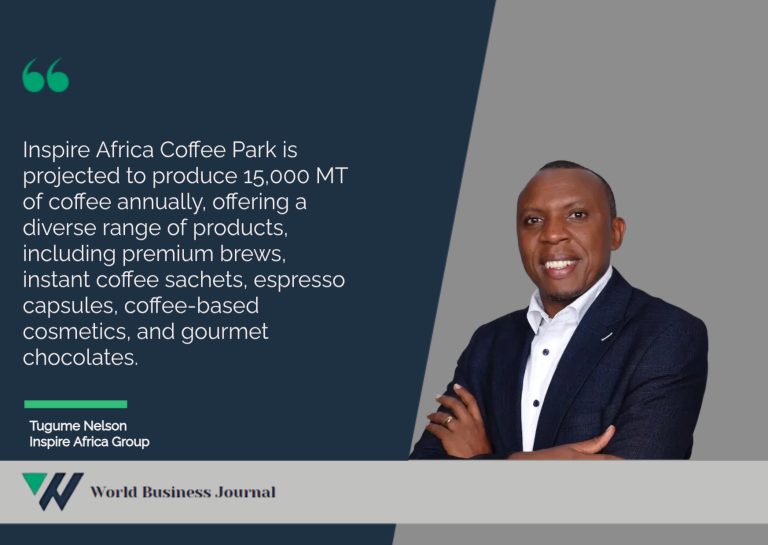
The park is projected to produce 15,000 MT of coffee annually, offering a diverse range of products, including premium brews, instant coffee sachets, espresso capsules, coffee-based cosmetics, and gourmet chocolates.

It will feature a coffee processing factory, a 1,000-capacity conference centre, a business complex with shops and cafés, and a 4,000-seat sports facility. We plan to cultivate 100 acres of premium coffee near Lake Nyabihoko and establish a resort to attract tourists and business travellers. The park intends to use blockchain technology to link funds with the factory. The process has already started to onboard farmers with the Inspire Digital Coffee Fund. This will ensure efficiency in the supply chain system. 

Photo Credit: Brindusa Negrea


We’re not just about adding value in the coffee industry; our goal is to create brands, establish industries, and lay the groundwork for future success via value addition.

What is the total investment in the project, and what is the organisational structure of Inspire Africa Group?

The Ugandan government has invested $26M in the coffee project and plans to add $20M, totalling approximately $50M.

The total estimated investment for the project stands at $150M, highlighting a funding gap and an invitation for equity investments from potential investors.

Photo Credit: Brindusa Negrea

We retain a 65% stake, while the government holds the remaining 35%. The Coffee Investment Consortium of Uganda (CICU), which includes representatives from the government, Inspire Group, and the Ministry of Science, Technology, and Innovation, oversees the project.

What benefits will this project bring to Uganda’s economy?

Uganda earns about $1.2B from coffee sold at $2.5/kg, while buyers in Italy, Germany, and the US pay $40/kg. Our goal is to increase earnings to $5B by 2030, potentially raising coffee prices to $30/kg. 

Photo Credit: Brindusa Negrea


Ernest Rubondo Discusses How Flagship Energy Projects Are Driving National Growth and Local Industry Capacity

Ernest Rubondo Discusses How Flagship Energy Projects Are Driving National Growth and Local Industry Capacity

World Business Journal talks to Ernest Rubondo, Executive Director of the Petroleum Authority of Uganda, about the significant progress made on the four flagship projects in the oil and gas sector and the role of the regulatory framework in fostering national development, facilitating knowledge transfer, and creating employment opportunities within the industry.

What are the latest developments in Uganda’s oil and gas sector?

Uganda’s oil and gas sector features 4 key flagship projects: the Tilenga and Kingfisher Petroleum Production Projects, the East African Crude Oil Pipeline (EACOP), and the Refinery Project.

The Kingfisher project is operated by CNOOC Uganda, includes 4 oil fields and is planned to have over 30 wells drilled for its production. The total investment for this project is estimated at $2B. 13 out of the 15 wells required for commencement of oil production from the Kingfisher oil field have been drilled, and the project is now about 60% complete and is expected to reach a peak production of approximately 40,000 bpd.

The Tilenga project is operated by TotalEnergies, consists of 6 oil fields and is planned to have over 400 wells drilled for its production. The total investment for this project is estimated to be $5B. To date, over 107 of the 180 wells required for first oil have been drilled using 3 rigs. The project is approximately 48% complete and is expected to reach peak production of 190,000 bpd.

The acquisition of land for both the Kingfisher and Tilenga projects is now complete, and all affected individuals have been fully compensated.

The 1,443 km, 24-inch diameter East African Crude Oil Pipeline (EACOP) runs from Hoima in Uganda to Tanga in Tanzania and is estimated to cost $5B. EACOP Ltd is developing the project, with TotalEnergies holding 62% ownership stakes, CNOOC at 8%, TPDC at 15%, and UNOC at 15%. The EACOP project has 5 camps in Uganda and 12 in Tanzania, along with 6 pump stations (2 in Uganda and 5 in Tanzania). At the end of May 2025, over 70 km of line pipe had been connected on the Ugandan side, while over 200 km had been connected on the Tanzanian side of EACOP. The pipeline project’s land acquisition has reached 98%, while the overall project progress stands at 62%.

Photo Credit: PAU

The 60,000-bpd crude oil refinery at Kabalega Industrial Park in Hoima District is planned to be developed by the Uganda Refinery Holding Company (URHC), a subsidiary of UNOC, with an estimated investment of $4B. The government of Uganda and the National Oil Company concluded an implementation agreement with Alpha MBM during April 2025 for investment in the refinery, thus paving the way for the commencement of pre-construction and subsequently construction work, which is expected to take 3 years.

What impact have regulations had on national development, knowledge transfer, and the integration of the oil and gas sector with other economic sectors?

Currently, the oil and gas industry directly employs close to 17,000 people, with 90% being Ugandans. An additional 150,000 indirect and induced jobs have been created, bringing the total jobs created by the industry close to 200,000. Ugandans occupy 64%, 85%, and over 99% of the management, technical, and support roles in the country’s oil and gas sector.

The government has worked with the private sector to enable 15 vocational institutions to attain globally recognised certifications in the oil and gas industry. 14,000 Ugandans have received training and achieved international certification in trades like welding, plumbing, scaffolding, etc.

Photo Credit: PAU

Over 2000 micro, small, and medium-sized enterprises have had their capacity built in areas of bidding and financial management, together with aspects of HSE. The key objective of this capacity building has been to enable them to secure and implement contracts to provide goods and services in the sector.

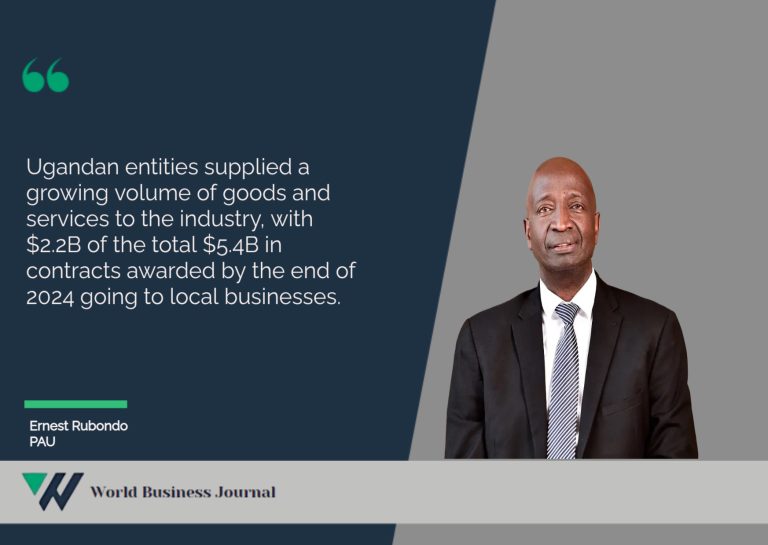
Ugandan entities supplied a growing volume of goods and services to the industry, with $2.2B of the total $5.4B in contracts awarded by the end of 2024 going to local businesses.

Joint ventures between Ugandan and international entities are key avenues for supporting technology transfer in the sector. As of the end of 2024, we have approved nearly 150 joint ventures, and 35 of these have secured contracts worth $338M.

The government has conducted studies to identify linkages between the oil and gas sector and key sectors of Uganda’s economy, such as agriculture, tourism, banking, transport, health, and education. Properly harnessing these linkages could generate an additional $8B in value from oil and gas activities.