


CTC Conservation Centre: Where Education and Conservation Are Redefining How Humans Understand Wildlife
World Business Journal talks toThomas Price, Founder, CTC Conservation Centre, about expansion plans, managing the lion population within the Centre, addressing concerns about wildlife experiences causing stress to animals, and nurturing human-animal connections.
What developments have taken place recently as part of the expansion plan, and have the cottage and restaurant projects been finalised?
We have expanded our area to over 60 acres, introduced new animals including 6 giraffes and 2 tigers, and applied to acquire additional animals such as elands, hartebeest, sloths, kangaroos, wallabies, and more lemurs.
The expansion plan includes constructing a landing strip to provide direct access for VIPs and high-end tourists, facilitating travel from national parks without detouring through Entebbe or Kajjansi. We also envision this unique setting as an ideal venue for government retreats and conferences, offering diplomats and dignitaries an extraordinary experience within the beauty of the wildlife reserve.
The completion of the cottage and restaurant has been delayed, and we now expect it to be ready this year.
With Uganda’s lion population declining, how many lions are currently in your facility?
We currently have 33 lions, with 22 being sub-adults or adults about two years old and 6 under one and a half years old. Initially, we imported five lions, with 28 born here over the past 3 years. To manage the population, we had a veterinary team from the Netherlands sterilise 8 females to prevent overpopulation.
How do you address concerns about wildlife experiences causing stress to animals, and what measures are in place to ensure their welfare?
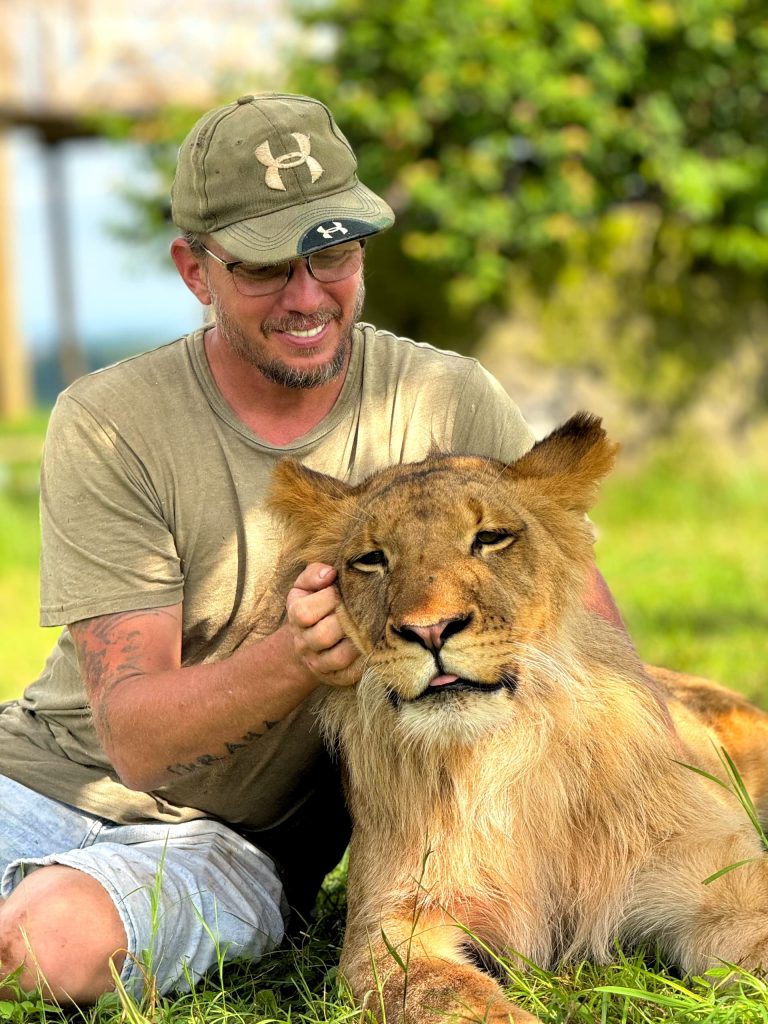
Our animals are stress-free and content, as evidenced by the high numbers of lion offspring. We never force interaction.
The experience is playful and voluntary, contrasting with other wildlife parks where animals might face more restrictive environments.
We support practices that prioritise animal well-being; animals have the freedom to make their own choices—whether to engage or retreat. If a lion decides to walk away, we respect it and do not follow. Instead, with multiple lions in the enclosure, their innate curiosity often encourages them to return on their own.
What educational impact do you hope to create in nurturing human-animal connections?
We collaborate with schools, offering substantial discounts so they experience these interactions for a fraction of the cost. This aspect of our mission is critical, particularly in Africa, where misunderstandings persist about wild animals being fierce creatures without emotions.
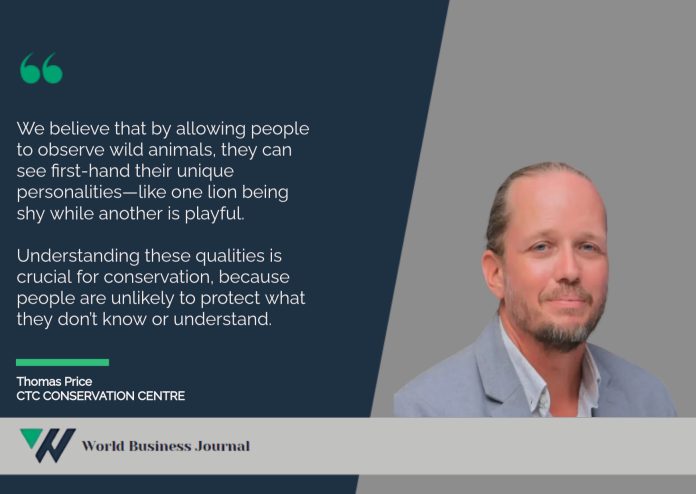
We believe that by allowing people to observe wild animals, they can see first-hand their unique personalities—like one lion being shy while another is playful. Understanding these qualities is crucial for conservation because people are unlikely to protect what they don’t know or understand.


