Monday, April 20, 2026
No menu items!
Home Blog Page 11

Hong Kong Steps Up Tech Ambitions with Launch of First Commercial HPC Service

Hong Kong Steps Up Tech Ambitions with Launch of First Commercial HPC Service

Hong Kong has just rolled out its first-ever commercial High-Performance Computing (HPC) service, marking a big leap toward becoming a global tech powerhouse.

The service, which is run by the Hong Kong Science and Technology Parks Corporation (HKSTP), offers advanced computing power that can help drive growth in industries like AI, big data, and high-tech manufacturing.

This launch is part of a broader push by the city to position itself as a leader in the digital age.

The Hong Kong government has set its sights on turning the city into a hotbed of innovation, and this new HPC service is a key part of that plan.

With cutting-edge infrastructure like this, local businesses and international companies alike can tap into the computing power they need to push boundaries in areas like AI, robotics, and microelectronics.

The goal? To ensure Hong Kong competes at the global level in some of the most forward-thinking industries.

Attending the launch event, Professor Sun Dong, the city’s Secretary for Innovation, Technology, and Industry, highlighted the importance of fostering a thriving tech ecosystem.

He said, “To truly drive innovation, we need strong industries that form the backbone of our economy. And we’re committed to making sure Hong Kong leads in the digital age.”

Located at HKSTP’s Tseung Kwan O InnoPark, the HPC service gives users access to resources they could have only dreamed of before—like running AI models and conducting complex data analyses that were once beyond reach for many small businesses.

The service is already attracting attention, with companies like Sensetime, a leading AI firm, and PanopticAI, a robotics startup, gearing up to make full use of the technology.

Dr. Sunny Chai, Chairman of HKSTP, stressed that the HPC service is just one part of a larger strategy to strengthen Hong Kong’s tech ecosystem.

“Creating an environment where collaboration can happen and innovation thrives is key,” he said. “Through services like HPC and the upcoming Microelectronics Centre, we’re positioning Hong Kong at the forefront of global technological innovation.”

What’s Next for Microelectronics?

Along with the HPC service, HKSTP is preparing to launch a brand-new Microelectronics Centre at Yuen Long InnoPark later this year.

This facility will focus on next-gen semiconductor materials like Gallium Nitride (GaN) and Silicon Carbide (SiC)—key components in emerging tech like electric vehicles and 5G networks.

The Centre will allow businesses to prototype and produce these materials at scale, helping Hong Kong further solidify its place in the tech world.

The microelectronics sector in Hong Kong is already growing fast, with more than 200 companies now operating in the field.

The new Centre will provide the infrastructure needed to help them grow and bring their products to market faster.

Hong Kong’s Vision for a Smart City

All these initiatives tie into Hong Kong’s larger vision of becoming a smart city. With AI, microelectronics, and data analytics at the core of its development plans, the city is positioning itself to take on the challenges of tomorrow and lead the charge in the global digital economy.

The launch of the HPC service is a significant step in Hong Kong’s journey. With continued investment in infrastructure and a focus on collaboration, the city is preparing for a future where technology and innovation go hand in hand.

EU regulation aims to streamline health tech assessments and cut red tape

EU regulation aims to streamline health tech assessments and cut red tape

The European Union has rolled out a major healthcare shakeup designed to get groundbreaking treatments to patients faster.

Known as the Health Technology Assessment (HTA) Regulation, the new rules promise a streamlined approach to evaluating medicines and medical devices across the region.

While this marks a significant step forward for patient care, experts are already debating whether the changes will live up to the hype.

What’s changing?

Until now, each EU country handled its own review of new treatments, often duplicating work and delaying access.

The HTA Regulation changes that by introducing a single EU-wide process for assessing the clinical value of cancer medicines, advanced therapies, and eventually, all new drugs.

Developers will submit one dossier for evaluation, cutting out the repetitive red tape.

The system kicked off this month with cancer drugs and therapies like gene and cell treatments.

By 2030, it will cover every new medicine and high-risk medical device, aiming to reduce delays in getting these innovations into hospitals and clinics.

Faster access for patients

For patients, this could be a game-changer. The regulation is designed to reduce the time between drug approval and availability, especially for life-saving treatments in areas like oncology and rare diseases.

European Commissioner for Health Stella Kyriakides described the move as “a turning point for access to innovation.”

Faster evaluations mean that patients across the EU, no matter where they live, might face fewer disparities in access to cutting-edge care.

But not everyone is convinced. Critics worry about how smoothly the process will work in practice.

Coordinating between Member States is notoriously tricky, and without strong collaboration, the promised benefits could stall.

Balancing unity and autonomy

One of the regulation’s biggest challenges is balancing the need for EU-wide assessments with individual countries’ rights to decide how they spend healthcare budgets.

While the HTA aims to simplify clinical evaluations, each nation still makes its own pricing and reimbursement decisions.

Experts note that while this centralization of assessments is a significant improvement, some Member States may continue to conduct their own evaluations to account for national differences in healthcare needs and budget priorities.

This could complicate the intended efficiency of the system.


A mixed bag for developers

For pharmaceutical companies and medical device makers, the changes are a double-edged sword.

On the one hand, the single dossier approach cuts down on bureaucracy and costs.

On the other, tight deadlines—some assessments must be completed in just 30 days—could strain companies and regulators alike. Smaller companies, in particular, might struggle to keep up.

Some industry insiders also worry that the streamlined process could inadvertently leave out important national context, creating gaps in how evidence is evaluated.

A work in progress

The HTA Regulation is a bold move to fix long-standing inefficiencies in Europe’s healthcare system.

It’s a step in the right direction, but its success depends on how well Member States, developers, and EU bodies work together.

If the system runs smoothly, patients could see faster access to treatments that might have been stuck in administrative limbo before.

But if cooperation falters, the framework could end up adding new layers of complexity instead of cutting through them.

For now, the regulation represents both hope and uncertainty. It’s an ambitious attempt to build a fairer, more efficient healthcare system—one that will be closely watched as it unfolds.

AU Launches Bold 10-Year Plan to Transform African Agriculture

AU Launches Bold 10-Year Plan to Transform African Agriculture

The African Union (AU) has unveiled an ambitious 10-year strategy aimed at transforming agriculture across the continent.

The Comprehensive Africa Agriculture Development Programme (CAADP) Strategy and Action Plan (2026–2035) was launched during a summit in Kampala, Uganda, and promises to tackle challenges like climate change, food insecurity, and economic instability.

Speaking at the summit, Uganda’s Minister of Agriculture, Hon. Frank Tumwebaze, stressed the importance of execution. “We must move beyond planning into implementation. These strategies must deliver real change for our people,” he said.

The summit brought together ministers from all 55 AU member states, along with policymakers, researchers, and representatives from farming communities.

Discussions focused on key obstacles to agricultural growth, including limited investment, outdated farming techniques, and underutilized arable land.

A Call to action for Africa’s potential

Africa’s population is projected to reach 2.5 billion by 2050, creating a pressing need to address skyrocketing food demand.

With a $100 billion annual food import bill, many leaders feel a sense of urgency to harness Africa’s agricultural potential.

Ugandan Vice President Jessica Alupo highlighted the irony of Africa’s situation, given the continent’s abundant resources. “Africa has fertile soils, fresh water, and a young workforce. Yet we struggle to feed ourselves. This summit must provide actionable solutions to reverse this trend,” she said.

The strategy emphasizes building climate-resilient agricultural systems, improving infrastructure, and reducing food waste.

Inclusivity is also a key focus, with plans to empower women, youth, and marginalized groups through access to resources and training.

Building on past Initiatives with a renewed vision


The 2026–2035 plan aligns with the AU’s Agenda 2063, a broader vision for a prosperous and self-reliant Africa. It also builds on the Malabo Declaration, a 2014 commitment to accelerate agricultural growth.

However, progress has been slow. Despite two decades of CAADP initiatives, the AU admits many targets remain unmet.

Estherine Fotabong, from the AU Development Agency, believes the new strategy marks a turning point. “This isn’t just another plan. It’s a continent-led effort to create sustainable and inclusive food systems,” she said.

Ethiopia’s Minister of Agriculture, H.E. Dr. Girma Amente, shared his country’s successes in integrating CAADP into its national policies.

Ethiopia has boosted agricultural investment, leading to consistent improvements in crop yields and resilience against climate shocks.

The summit will conclude with the Kampala Declaration, a formal commitment by AU member states to adopt the strategy.

Leaders hope it will provide a clear roadmap for addressing Africa’s food security challenges while boosting economic growth.

The road ahead won’t be easy. Climate change, conflicts, and population growth continue to strain Africa’s food systems.

Yet there is optimism that with the right investment and cooperation, the continent can achieve agricultural self-sufficiency.

For Uganda’s Prime Minister, Rt. Hon. Robinah Nabbanja, the message is clear: “Our future depends on our ability to feed ourselves. Let this strategy be the catalyst for a brighter, more sustainable future for Africa.”

Uganda joins BRICS as Africa’s role in global trade grows


Uganda joins BRICS as Africa’s role in global trade grows

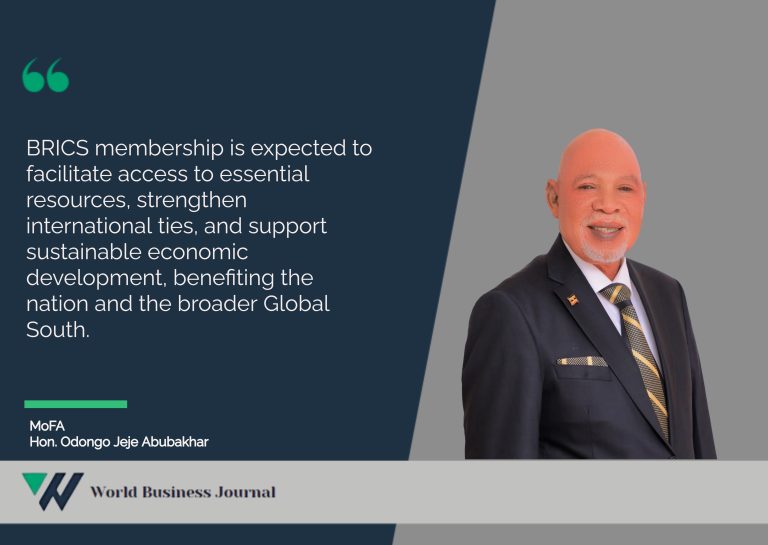
Uganda has joined the BRICS bloc as one of 13 new partner countries, marking a pivotal step in its efforts to establish a stronger presence on the global stage. 

BRICS, which includes Brazil, Russia, India, China, and South Africa, represents a powerful coalition of emerging economies with ambitions to reshape global economic dynamics. 

This move signals Uganda’s intention to build stronger ties with non-Western economies while reducing its reliance on traditional financial sources. 

The partnership also highlights Uganda’s broader strategy to diversify its economic alliances and seek alternatives to Western-led institutions like the IMF and World Bank. 

While Uganda’s role is currently that of a partner country rather than a full member, Brazil’s Foreign Minister Mauro Vieira has indicated that full membership could be on the horizon. 

The process, which requires consultations and a detailed vetting procedure, may take up to a year to complete. 

For Uganda, this new relationship with BRICS could open doors to significant economic opportunities, potentially positioning the country as a key player in the evolving global economy. 

Why Uganda? 

Uganda’s selection as a BRICS partner has, perhaps predictably, sparked plenty of discussion, particularly since it’s the only East African Community country on the list. 

This is especially notable given Kenya’s larger economy, more advanced development, and greater regional influence. 

So why Uganda? Analysts believe its strategic location and openness to aligning with non-Western trade systems likely played a decisive role. 

Uganda now stands alongside Ethiopia—one of BRICS’ newest full members—as just the second East African nation associated with the bloc. 

BRICS now represents over 3.3 billion people and contributes a staggering $28 trillion to global GDP. 

The bloc is positioning itself as an alternative to traditional Western-led institutions like the International Monetary Fund (IMF) and World Bank. 

By joining BRICS, Uganda has aligned itself with a group aiming to promote multilateral economic cooperation while reducing global reliance on the US dollar for trade. 

Opportunities for Uganda 

This new partnership opens several doors for Uganda, especially through the BRICS New Development Bank. 

Established to offer alternatives to traditional funding options, the bank provides fairer lending terms than institutions like the IMF. 

For Uganda, where external financial aid has been shrinking, the prospect of borrowing at an annual interest rate of just 2% is a game-changer. 

These funds could be critical for developing infrastructure and funding other national projects. 

Uganda’s economy, which is largely driven by agriculture and resources such as oil, minerals, coffee, and tea, stands to benefit from access to larger markets and more diverse trade agreements. 

Patricia Kishemeire, Uganda’s International Municipal BRICS Forum ambassador, sees huge potential in these partnerships. 

Following the announcement she pointed out that working with BRICS nations could lead to stronger trade deals, increased foreign investment, and a more influential role on the diplomatic stage. 

Challenges on the Horizon 

Despite this, challenges remain. Uganda’s status as a partner country, not a full member, means it doesn’t yet have voting rights or the full privileges that come with membership. 

Achieving full member status requires unanimous approval from the bloc’s five founding nations. 

That means that if even one of them raises an objection, Uganda’s application could be blocked. 

As a result, the path ahead is far from certain. Uganda will need to carefully navigate the internal geopolitics of BRICS to fully benefit from this association. 

A “bold step” towards global integration 

Uganda’s inclusion in BRICS reflects a broader shift in global alliances, with African countries playing an increasingly prominent role on the world stage. 

For Uganda, this is an opportunity to reduce reliance on Western lenders and explore alternative financial systems.

While full membership may still be a way off, the partnership itself signals a bold step towards greater global integration.

With the right mix of diplomacy and strategy, Uganda could position itself to reap significant economic and trade rewards in the years to come.

First Textile Recycling Unit Opened in Dubai by Landmark Group

First Textile Recycling Unit Opened in Dubai by Landmark Group

Retailer Landmark Group has agreed to open the first textile recycling facility in the Dubai World Central area. This is an essential step towards promoting sustainability in the Middle East, as it aims to reduce waste and give used fabrics a new chance to be employed and worn.

The company started a takeback program last year at the Centrepoint at Max Fashion stores, allowing customers to donate old clothes, no matter the brand. Customers who participated in the program would be rewarded for helping with this initiative.

Now, with the new recycling facility, textile waste will be reduced significantly while creating new fashion pieces that people will love.

Uncollected Waste and Funds for Recycling

Back in December 2023, the United Arab Emirates announced that a tax on packaging was taken into consideration. The reason was to obtain funds for recycling.

In 2022, the Organization for Economic Co-operation and Development said that there is about 40% of uncollected or mismanaged litter in the Mena area. More than 50% of the waste is sent to landfills, with 5% being recycled and 1% being incinerated.

As a result, a recycling unit would come in handy, giving new materials the chance to a new life and decreasing waste in plenty of regions.

The First Textile Recycling Facility in the Middle East

Dubai will be home to the first textile recycling facility in the area. Following the takeback program from last year at different stores, Landmark Group now wants to focus more on recycling, making it possible for textiles to be transformed into pieces that other people will be interested in.

UAE Circular Economy Council key representatives went to the inauguration ceremony of the new facility. The ceremony had Landmark Group chairwoman Renuka Jagtiani and UAE Minister of Economy Abdulla bin Touq Al Marri in attendance.

“We have introduced several initiatives across various stages of our products’ lifecycles and operations to reduce our environmental impact and drive greater circularity,” said Renuka Jagtiani.

The facility, Landmark Circulife, will take discarded textiles and fabrics, process them, and transform them into recycled fibers that will be useful in creating new clothing items and home furnishings.

This new initiative is expected to have a massive impact on the surrounding environment, having an initial capacity of 2,000 metric tons of annual waste. Moreover, the area will no longer have to rely on virgin materials, and textile waste will be significantly reduced.

Over time, the facility will be able to handle about 11,000 metric tons of textile waste, but the capacity will keep growing. As time goes by, 140,000 metric tons of CS2 emissions are expected to be reduced, and 107 GWh of electricity will be saved. Millions of litres of water will be saved as well.

By 2050, Landmark Group hopes to be able to make more climate-positive changes. Moreover, the conglomerate representatives stated they want to spend $1 billion over 3 years to open 400 new stores in Southeast Asia, India, and GCC.

Tembo Steels Advances Green Initiatives in Steel Making

Tembo Steels Advances Green Initiatives in Steel Making

For over 2 decades, Tembo Steels has been at the top of the steel manufacturing industry in Uganda. The company went from TMT bar production to green steel.

Tembo Steels became Uganda’s only primary steel production provider, doing its best to avoid the impurities present in scrap-based steel. With green steelmaking, protecting the environment becomes a priority, especially considering that steel production is currently responsible for around 10% of global carbon emissions and around 30% of emissions from industry.

A New, Greener Approach to Steel Making

In steelmaking, Blast Furnace is the main method used for production, making for about 70% of the world’s total steel production share. Meanwhile, scrap recycling, the electric furnace method, is the world’s secondary steel production technique, accounting for about 23% of global steel production.

However, the Blast Furnace Route leads to plenty of carbon emissions, actually being the most intensive method in this regard compared to other routes. It leads to 2.2 – 2.4 tons of CO2 per ton of steel. Meanwhile, the EF route has a 0.6 ton of CO2 emission.

But now, a greener approach, known as the DRI or Direct Reduced Iron route, takes the lead. This has the lowest carbon emission in steel, leading to pure steel production while being a nature-friendly alternative.

Tembo Steels is a company that aims to reduce carbon emissions by adopting greener steel production methods. In fact, the firm managed to eliminate carbon emissions by up to 70% over the years.

How Tembo Steels Works Towards a Greener Future

Tembo Steels takes advantage of the DRI/scrap-based route and uses renewable energy to produce steel, ensuring 100% CO2 intensity reduction. The firm got rid of billet reheating as well. Tembo Steels cut down carbon emissions by up to 70% with the help of the EF route and with their DRI plant. But that’s not all.

Tembo Steels also uses level two automation. With the help of digitalization, the company is more efficient and productive, enhancing raw material use and minimizing carbon emissions. Also, they use yield improvement, which employs fewer resources, less processing time, and less energy. This also leads to lower CO2 emissions.

Tembo Steels Is the Only Primary Steel Producer in Uganda

Tembo Steels has two operational plants, and with its DRI focus, it is Uganda’s only primary steel production provider. On top of bringing outstanding product quality due to eliminating steel impurities, the company also brings more product diversity to the continent. It produces HRC, structural steel, and multiple other substrates.

“We are the only primary steel producer in the country, which gives us an inherent advantage in steel purity,” says Sanjay Awasthi, CEO of Tembo Steels Uganda. “Primary steel production, using virgin iron ore, avoids residual elements found in scrap melting. These residual elements can weaken overall quality, affecting strength and ductility. Our position as the sole primary steel manufacturer ensures a superior product.”

By 2050, the global vision is to reduce CO2 emissions to 0.6 tons. Tembo Steels is on the way to making this possible, joining countries like Italy and the USA in protecting the environment with greener processes.

Romania and Bulgaria Become Full Schengen Members

Romania and Bulgaria Become Full Schengen Members

Romania and Bulgaria are finally allowed to become full Schengen Area members starting January 1, 2025.

The two countries had been trying to join the Schengen Area for over a decade but were prevented by parties that did not believe the two countries were ready for this change. But now that Austria no longer opposes Romania and Bulgaria joining Schengen, this milestone will finally be reached by the countries that were set to join since 2011.

However, the process may be slower, so people might still have to go through border checks before customs verifications disappear.

Romania and Bulgaria Finally Join the Schengen Area

Romania and Bulgaria have been waiting to join the Schengen Area since 2011. Both countries were declared ready to join by the European Commission. Unfortunately for them, other countries opposed the decision.

France and Germany were two EU members that denied the joint candidacy of the two countries due to immigration and governance problems. So, every year, Schengen accession was delayed. In the end, Germany and France lifted their veto, slowly but surely making way for Romania and Bulgaria to join Schengen.

The last two countries standing in the way were the Netherlands and Austria. The former lifted its veto back in 2023, leaving Austria as the sole deciding country in this regard. However, the EC lifted sea and air checks in 2024, showing that things were progressing. In November, Austria also lifted its veto, so the two countries can now join the Schengen area without problems.

Being a Schengen Area member means free movement is easier between EU countries, which allows business travelers to cross borders without any obstacles. As a result, it will be easier for various markets in Europe to conduct sales, attend meetings, and more.

“Fully in Schengen – where you belong,” said Ursula von der Leyen, the European Commission’s president, on social media.

Will Checks Be Lifted Immediately at the Borders?

Even though the two countries become full members in January 2025, border checks will not be gone from the first day. Actually, the Budapest deal talks about introducing border checks between Romania and Bulgaria and Hungary and Romania for at least 6 months. This is to ensure there are no serious threats to public policy and internal security.

Still, the timeline could increase, depending on the case. This is also to reassure Vienna, which has been constantly concerned about irregular migration.

Migration was one of the main reasons why Austria was constantly refusing to let the countries join Schengen. Therefore, business travelers from Bulgaria and Romania will still have to deal with border checks for a while before traveling more smoothly.

Having no border checks due to Schengen Area membership means streamlined logistics, easier market access, reduced travel time, and more straightforward talent acquisition for businesses trying to expand or improve their operations. Romania and Bulgaria are on the way there, but they still have to deal with some restrictions for at least a few months before anyone can travel passport-free to another Schengen state.

How Will the EU Mercosur Agreement Affect Agriculture in Europe

0

How Will the EU Mercosur Agreement Affect Agriculture in Europe

Following 25 years of negotiations, The EU has approved the Mercosur trade deal. This happened after European Commission president Ursula von der Leyen went to Montenegro to sign the agreement, which she called “historic.”

She met with the four founding members of Mercosur, respectively Uruguay, Paraguay, Brazil, and Argentina. Despite negotiations being on and off for over 20 years, discussions increased in the last few months due to the rise of Donald Trump’s campaign.

This agreement focuses on agrifood products and raw materials, aiming to make trades easier while reducing consumer prices. However, according to many specialists, this agreement puts EU agriculture at risk. Mercosur could make the EU more dependent on Mercosur countries for poultry, beef, rice, and sugar while undermining the high standards established by Europe, its farmers, and its sovereignty.

The Potential Consequences of the Deal

Speaking about the deal, Ursula Von der Leyen said that this was a great opportunity for both trade blocs following 25 years of negotiations. “We both believe that openness and cooperation are the true engines of progress and prosperity. I know that strong winds are blowing in the opposite direction towards isolation and fragmentation, but this agreement is our clear response,” she said.

But there’s more to it. In fact, Mercosur may have unwanted consequences such as:

Competition for EU Farmers

EU farmers have agreed that Mercosur might have some harmful effects. Farmers in Europe have actually protested against this deal before, talking about how it would bring cheap South American imports that go against the green and food safety standards imposed by the EU. Strict regulations make local production more expensive, but farmers face more competition due to the lower import requirements.

Poultry Meat Production Effects

The trade is also expected to affect European Union’s poultry meat production under Mercosur. For example, since breast meat necessity is a considerable reason for producers to raise chickens, importing two fillets from another country would result in 1 chicken not being raised in the EU.

Several EU States Disagreed to the Deal

Not all EU countries are fans of the deal. One of the prominent figures opposing the deal is French President Emmanuel Macron, who called the trade deal “unacceptable.” Poland also joined France, opposing the agreement. Meanwhile, Giorgia Meloni, the prime minister of Italy, also said that conditions to approve the deal had not been met before the announcement.

AVEC has urged the EU to oppose this deal, mentioning how Mercosur will severely affect EU consumers and farmers. AVEC considers that the EU must put its own consumers and farmers at the top and uphold its values. According to Steenberg, the AVEC secretary general, the trade deal is considered a hazardous decision.

Furthermore, many believed the Mercosur agreement might fail, causing concerns among commission members. Because China is increasing its investments in South America at a fast pace, officials think the EU might lose credibility and influence. At the same time, Europe is focusing on diversifying its trade relations, so it doesn’t have to depend on the U.S. and China anymore.

Biden Agrees to Give More Funds to a Multi-Country Rail Project in Africa

Biden Agrees to Give More Funds to a Multi-Country Rail Project in Africa

Joe Biden went on a visit to sub-Saharan Africa and used his last day to go to Angola. He traveled to Lobito’s coast and toured an Atlantic port terminal, which is a section of the Lobito Corridor railway, a project that is being redeveloped.

The American president, whose term comes to an end in January, wanted to help advance a project that involves extending a railway that would ease the transportation of minerals from Zambia and Congo. These minerals are necessary for electric vehicle batteries and other batteries used by various electronic devices.

This project is believed to be the most significant investment made by the US on a project outside the States. It will take several years to complete the 1,200 miles of train lines, but it’ll benefit the parties involved as they will counter Chinese influence in the area. However, the entire deal is uncertain, considering that Donald Trump will take over the White House in January.

What Is the Lobito Corridor Project?

The Lobito Corridor project is a railway plan to revitalize 1,200 miles of railways connecting Zambia and Congo to Angola, making mineral transport easier. This can help gain access to materials used in batteries and clean energy technologies.

President Joe Biden went to Africa to visit the railway, and realized how important it is from a strategic standpoint. Knowing that the US and its allies have invested in this project before, he also decided to give an extra $600 million toward the railway development.

China has a significant influence in the area, as it conducts mining in Zambia and Congo. However, with this new plan, China’s cloud can be countered. Still, Biden declared that investment is not a way to confront China; it would rather help ensure long-term economic partnerships while allowing infrastructure to develop.

Why Is This Project Beneficial for both Africa and the US?

Angola is rich in minerals like lithium and cobalt, which are used to make electric vehicle batteries. It also has oil resources. Zambia is a copper-rich region, and the Democratic Republic of Congo also has lithium, copper, and cobalt mines. Many of these minerals can be transported to the United States and Europe through the Lobito Corridor.

This can be useful for businesses that utilize these resources, building a stronger future. Now, it takes 45 days for cargo to reach the US as trucks have to go through South Africa. With the project progressing, the resources would only take 45 hours to reach US soil.

“This is not just a logistical project. It is a driving force for economic and social transformation for millions of our people,” said Félix Tshisekedi, President of Congo.

Many believe that this will create a new US-Africa partnership. The outcome of this plan depends on the Trump administration. The White House stated that the Republicans have tried to promote African business interests before, so things might go according to plan even under Trump.

Emerging Technologies That Will Change the World – Meta’s AR Glasses, SpaceX’s Crew Dragon Capsule, and More

Emerging Technologies That Will Change the World – Meta’s AR Glasses, SpaceX’s Crew Dragon Capsule, and More

After many years of fan speculation, Meta has finally given us a glimpse of its first AR glasses. Meta’s CEO, Mark Zuckerberg, has spent billions of dollars on developing one of the firm’s most anticipated projects – an augmented reality prototype that will change the future of computing as we know it. Meanwhile, SpaceX will help bring back stranded astronauts.

From now on, we may interact with the digital landscape in a completely new way thanks to the technologies being developed.

Credit Source – Photo by Bram Van Oost on Unsplash

The AR Glasses

More than 10 years ago, Google attempted to market Google Glass. The 2013 project was the company’s first try with an AR device. Unfortunately, the product didn’t meet the quality standards or expectations, so it had to be discontinued.

Similarly, Microsoft tried to release its own AR technology success with HoloLens, but this also had to be canceled because it couldn’t gain any traction.

On the opposite, Apple managed to start selling its VR headset earlier in 2024 with a product called “Vision Pro.” The headset costs $3,500. Although Meta and Snap finally launched their AR prototypes, it will still take a while to see these on the market due to the costs involved with mass production. In the meantime, Zuckerberg claimed that they are “going to use it mostly internally” to make improvements to their software.

Snap also announced its 5th generation Spectacles. These can help mix physical world elements and digital graphics. However, developers are the only ones with access to this technology, and they will have to spend $99 per month for one year to create AR apps the device can use.

Bringing Back Stranded Astronauts

After astronauts Sunita Williams and Barry Wilmore had become stranded, a SpaceX Crew Dragon capsule will try to bring them back home. The capsule has docked at the ISS, and the astronauts will return in February 2025.

Barry Wilmore and Sunita Williams traveled to space in June 2024. They took a trip inside a Boeing Starliner, planning to stay in space for 8 days. But this ended up in a disaster due to helium leaks and thruster failures. They couldn’t return to Earth, leading to NASA and Boeing spending months trying to find the problem and come up with solutions. They returned the empty capsule in the meantime.

Meanwhile, a SpaceX capsule was docked at the International Space Station. It is meant to transport four people, but it has two empty seats so it could bring back the stranded astronauts.

Unfortunate Events in the Tech World

Following Hurricane Helene, the largest known high-purity quartz deposit was eradicated. This was crucial for microchips. So, the global tech supply will no longer have access to this source.

But this is not the only less favorable event that took place recently in the tech market. About 97,000 cars from BYD had to be recalled after a manufacturing fault was discovered. This issue, related to a steering control unit, may represent a fire hazard.