


Modern Group Chairman Details Production Scaling and Product Expansion in Tiles and Sugar
World Business Journal talks to Ashish Monpara, Chairman of Modern Group, about the company’s expansion in the tile and sanitary ware sector, the operationalisation of Kidera Sugar—set to become the largest sugar mill in East Africa—the core challenges in ensuring smooth operations along the manufacturing value chain, and the integration of technology and e-commerce into the business.
How is the initiative to triple tile production progressing?
Tile production has doubled to 100,000 sq. ft. per day, with new offerings in glazed tiles, larger formats, and outdoor options for parking and pools.
Our portfolio now includes bath fittings and sanitary ware. We have also introduced Modern Adhesive to address adhesion quality issues and improve tile setting.
We have expanded our retail network to 50 locations in East Africa: 15 in Tanzania, 10 in Kenya, and 25 in Uganda.
What is the current status, and what are the plans for the sugar business?
Kaliro is currently operating at full capacity, crushing 2,500 tonnes of cane per day and producing about 250 metric tonnes of sugar daily, with plans underway to double this capacity.
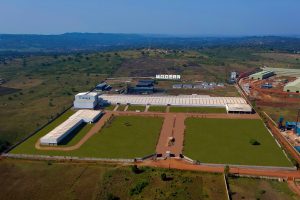
Modern Sugar (Kidera) is scheduled to open this year, and once operational, it is expected to become the largest sugar mill plant in East Africa, with a planned crushing capacity of 10,000 tonnes of cane per day (TCD) and an anticipated annual production of approximately 1 million tonnes (MT) of sugar.
This plant will produce both raw (natural brown) and industrial-grade (white) sugar. It is projected to have a significant economic impact by creating around 9,000 jobs, offering extensive opportunities for local youth and farmers, and reducing reliance on imported industrial sugar.
What core challenges do you face in ensuring smooth operations along the manufacturing value chain from production to sales?
Transportation in East Africa, which is heavily reliant on road networks, is a major hurdle for us. To address this, we launched a transportation division, starting with 40 trucks and expanding to 150 within the year to support our 50-hour delivery plan.
Owning our fleet has resolved major logistics issues, decreased transportation costs by 50–60%, and significantly boosted profits.


